AI Literature Review Generator
Generate a literature review from a research question
AI Literature Review Generator
Build structured, citation ready reviews from 100+ papers in minutes, not weeks.
Overview
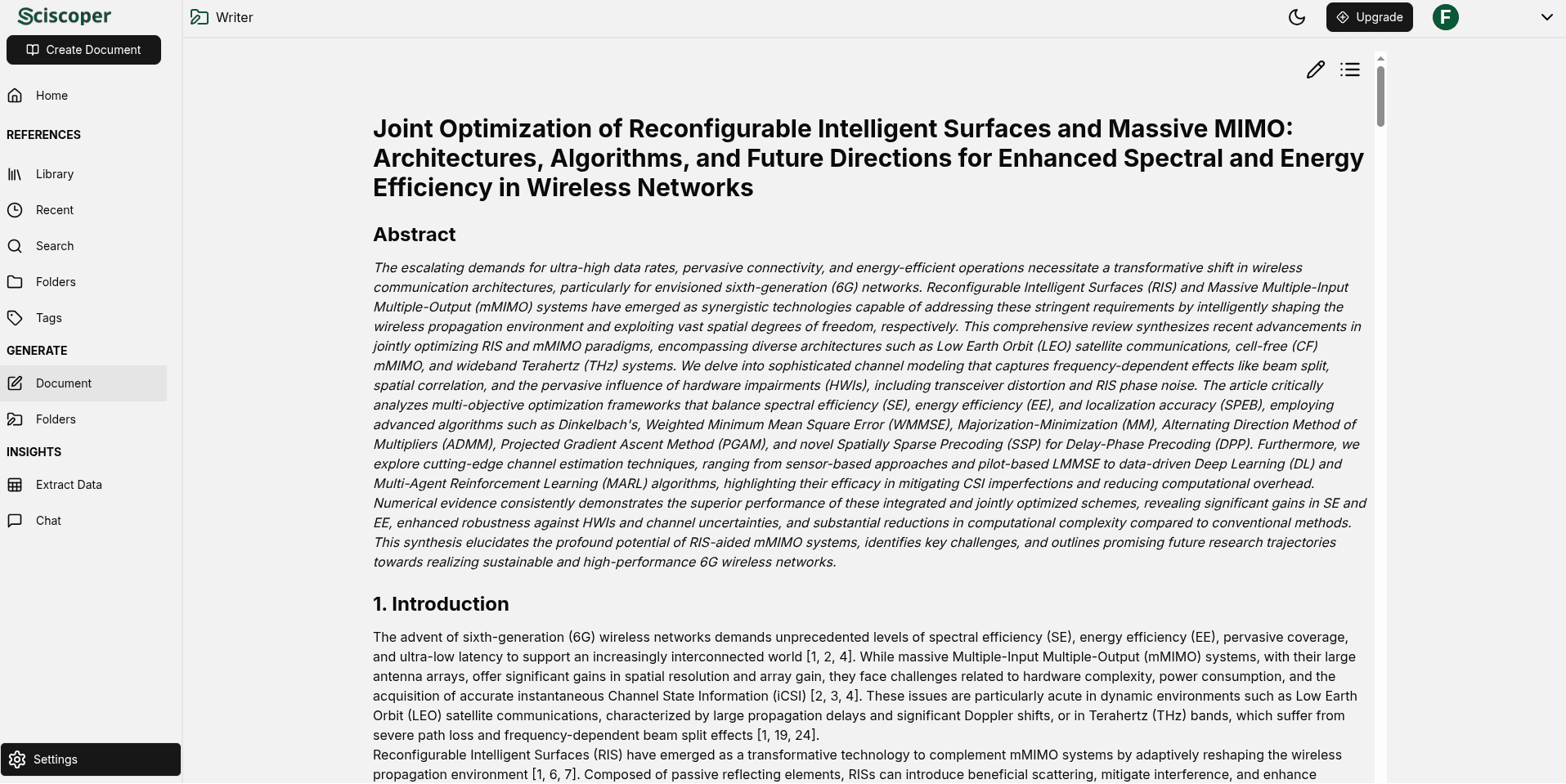
The AI Literature Review Generator in SciScoper is designed to transform how researchers engage with large volumes of academic literature. Rather than manually reading, annotating, and cross-referencing dozens or hundreds of papers, the tool automates the synthesis process while preserving scholarly rigor and traceability. By ingesting PDF articles or BibTeX libraries, SciScoper analyzes full-text content to identify conceptual themes, methodological patterns, and relationships across studies. Unlike simple summarization tools, the generator produces structured review narratives that reflect how literature reviews are written in practice. Studies are grouped and compared based on research questions, methodologies, populations, and key findings, enabling users to move beyond isolated paper summaries toward a coherent analytical synthesis. The system also highlights areas of consensus, conflicting results, and underexplored research gaps, helping researchers position their work within the existing body of knowledge. This tool is particularly valuable for postgraduate students and researchers who are navigating the initial stages of a thesis or dissertation, as well as for experienced academics preparing systematic or narrative reviewsor background sections for journal submissions. By reducing the cognitive load and time investment required to analyze large corpora of literature, SciScoper allows researchers to focus more on interpretation, argumentation, and original.
Key Features
- Upload PDFs or BibTeX libraries for automatic ingestion
- Analyze 10–100+ papers with semantic clustering
- Natural language queries for literature synthesis
- Grouped insights by methodology, outcome, or topic
- Export reviews to LaTeX, Word, or Markdown
Benefits
By automating synthesis and organization, the AI Literature Review Generator can save researchers ten to twenty or more hours per review, depending on scope and complexity. It enables rapid identification of dominant trends, methodological biases, and contradictory findings that might otherwise require extensive manual comparison. The resulting text is structured, coherent, and citation-ready, significantly reducing the friction between literature analysis and academic writing. Because SciScoper works directly with users’ own PDF files and reference libraries, it integrates naturally into existing research workflows rather than replacing them. The tool is designed to support, not obscure, scholarly judgment, allowing users to edit, refine, and expand the generated content as their research evolves.
How It Works
- The workflow begins by uploading a set of academic PDFs or a BibTeX file containing the relevant references.
- Once the documents are ingested, users pose a research question or specify a review objective
- SciScoper then analyzes the literature corpus and generates structured output that groups studies by relevant dimensions such as study design, methodology, population, or outcomes
- The final review can be exported to LaTeX, Markdown, Word, or PDF formats for seamless integration into manuscripts, theses, or grant applications.
Frequently Asked Questions
How accurate are the reviews?
SciScoper generates evidence-based summaries with traceable citations and supports user editing.
Can I export to LaTeX or Word?
Yes, you can export directly to LaTeX, Word, Markdown, or plain text formats.
Start Your First Literature Review
Upload your papers and generate your first review in minutes. No credit card required.