How to Create a Literature Review Using Sciscoper
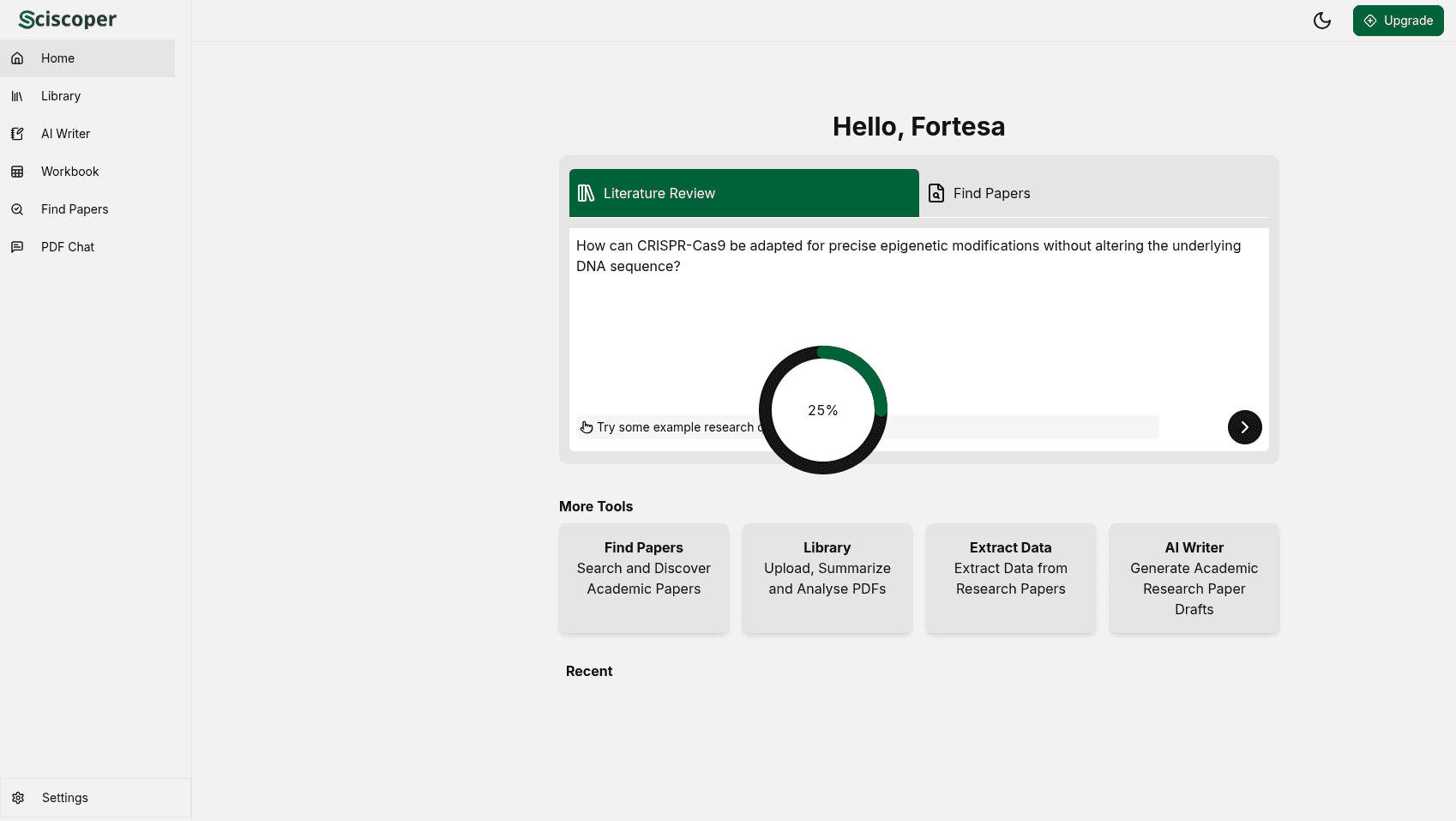
Struggling with academic research and literature review writing? You're not alone. Conducting a thorough literature review represents one of the most time-intensive phases of any research project. The traditional process of finding relevant research papers, analyzing methodologies, synthesizing findings, and structuring a coherent document can consume weeks of valuable research time.
But what if you could streamline your research workflow and generate a properly structured, comprehensive literature review in less than 10 minutes?
Welcome to Sciscoper, our AI research assistant designed to accelerate scientific discovery. This comprehensive guide will walk you through using our advanced AI-powered literature review generator to enhance your research efficiency and produce high-quality academic content.
Understanding the Literature Review Process in Academic Research
Before we explore the technical steps, let's examine why literature reviews are fundamental to quality research. A literature review serves as more than just a summary of existing sources, it represents a critical analysis of the current knowledge landscape surrounding your research topic. Effective literature reviews:
Identify seminal works
and key research papers in your field
Synthesize diverse findings
to reveal trends, patterns, and contradictions
Pinpoint research gaps
that your work can address
Establish theoretical foundations
for your research questions
Demonstrate scholarly competence
and domain expertise
raditional approaches require manual academic research across multiple databases, followed by painstaking organization and synthesis. Sciscoper's literature review tool revolutionizes this process through intelligent automation.
Introducing Sciscoper's Dual-Interface Research Dashboard
Sciscoper features an intuitive dashboard with two dedicated research modules:
Literature Review Generator
- For automated synthesis and document creation
Paper Search
- For traditional literature discovery
This guide focuses specifically on harnessing the power of our AI literature review generator to transform your research questions into structured academic documents.
Step-by-Step Guide: Generating Your Literature Review
Step 1: Access Your Dashboard and Navigate to Literature Review Tab
After logging into your Sciscoper account at sciscoper.com, you'll arrive at your personalized research dashboard. The interface clearly displays two main tabs:
Literature Review
(for AI-powered generation)
Paper Search
(for discovery)
Click on the "Literature Review" tab to access our specialized generation interface.
Step 2: Input Your Research Question
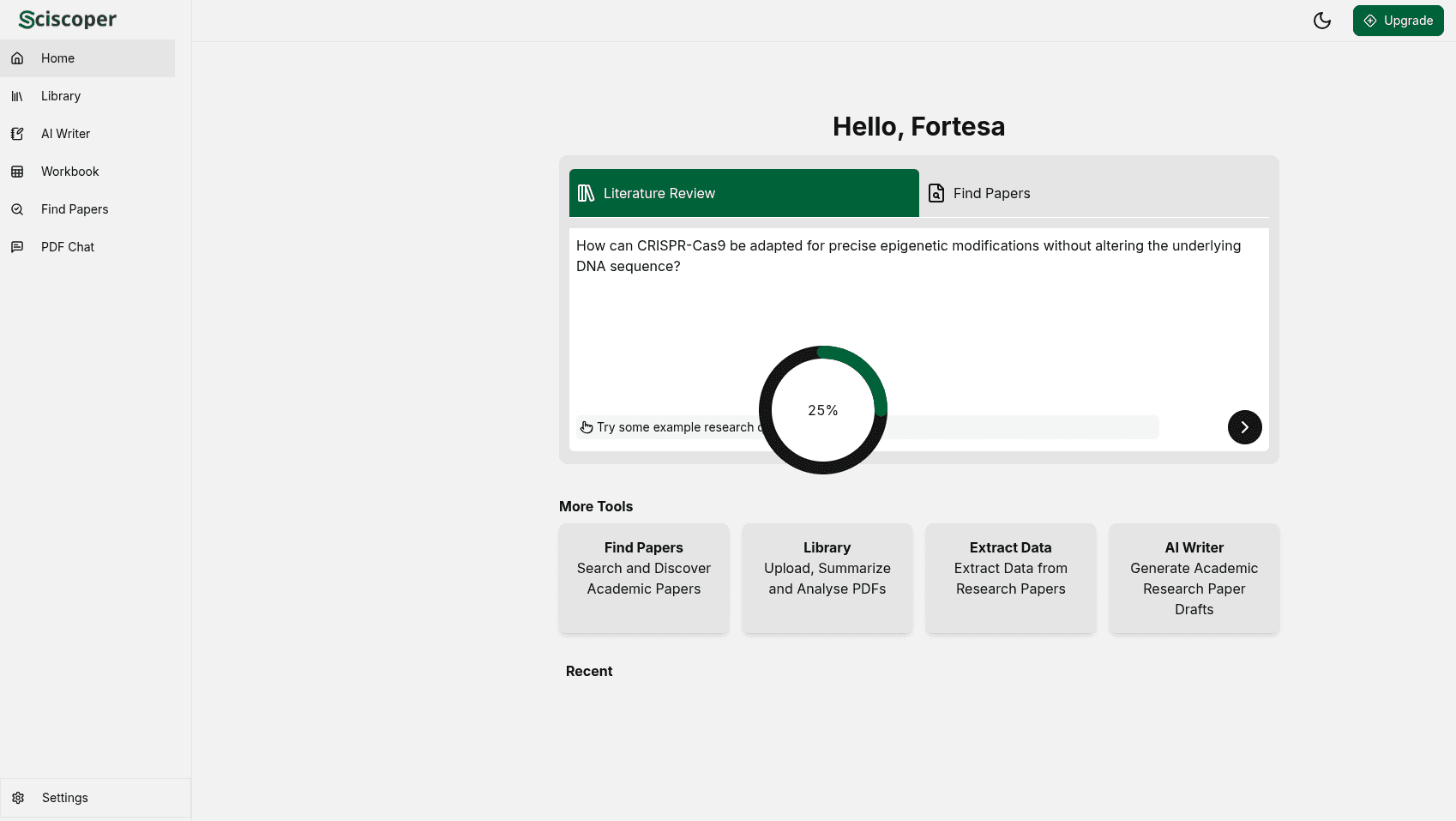
Within the Literature Review tab, you'll find a clean, focused input area designed for your research questions.
Crafting Effective Research Questions for Optimal Results:
Prioritize Specificity: Well-defined questions yield more targeted reviews
Less Effective:
Machine learning in healthcareMore Effective:
How has deep learning improved early detection of diabetic retinopathy in clinical settings since 2020?
Include Key Elements:
Incorporate relevant methodologies, timeframes, populations, or comparative elements
Maintain Academic Rigor:
Use discipline-appropriate terminology and conceptual precision
Need inspiration? Click "Try some sample research questions" to explore professionally crafted examples across various disciplines. These templates demonstrate the optimal structure and specificity for best results.
Step 3: Initiate Generation and Wait for Processing
After entering your research question, click the generation button to begin the AI analysis process.
Important Processing Information:
Generation time: 4-8 minutes
During this period, our AI:
Analyzes your question's core concepts and context
Searches comprehensive academic databases for relevant literature
Synthesizes information from multiple credible sources
Structures findings into a coherent academic document
This processing time ensures thorough analysis rather than superficial results. The wait represents the comprehensive nature of our research synthesis algorithm at work.
Step 4: Access and Utilize Your Generated Literature Review
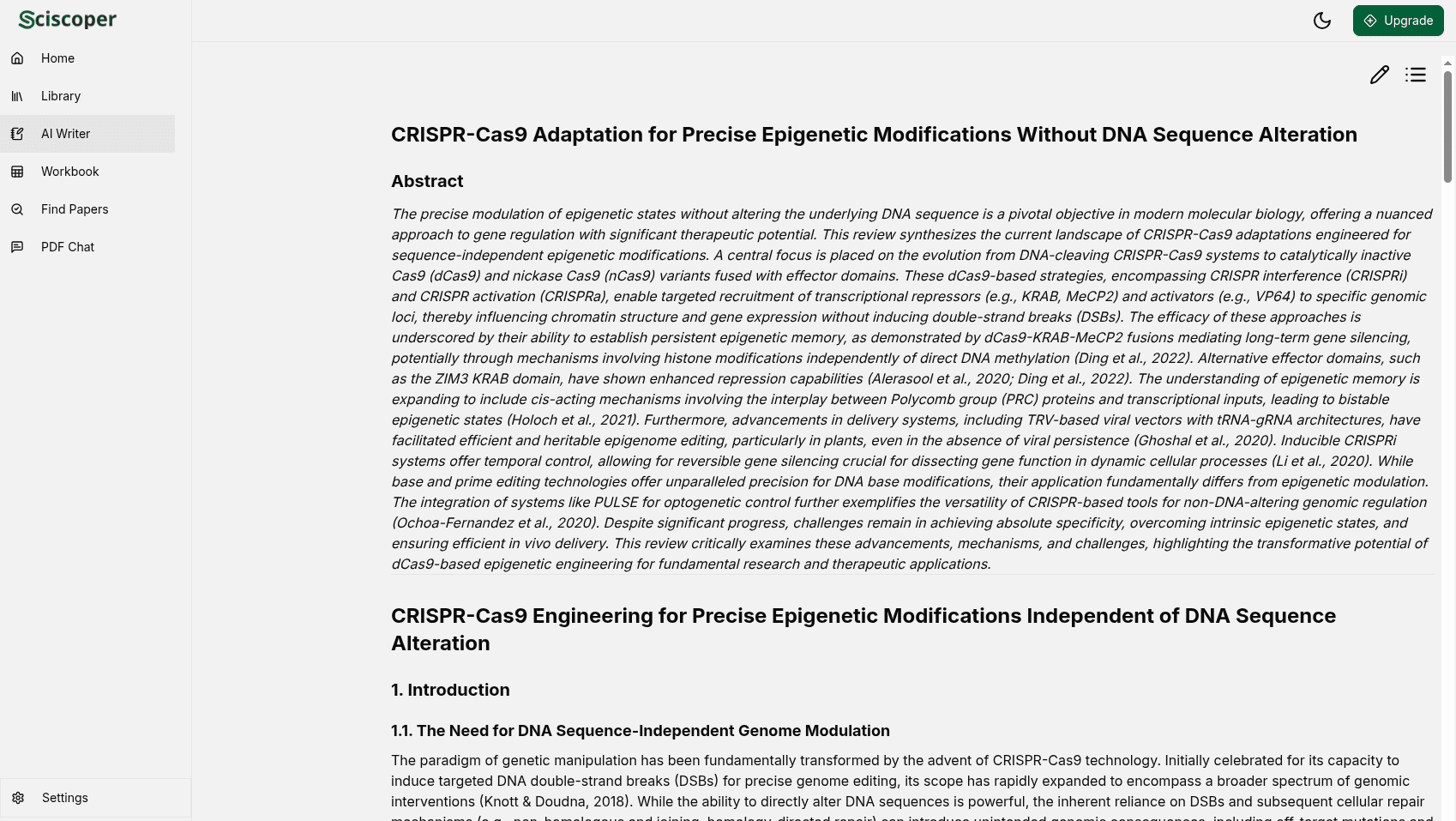
Once processing completes, your structured literature review will appear in a clear, organized format. Typical outputs include:
Introduction and Context Setting
Theoretical Framework Overview
Methodological Landscape
Key Findings and Thematic Synthesis
Identified Research Gaps
Conclusion and Future Directions
Comprehensive Reference List
Maximizing Your Generated Content:
Use as a Foundation:
The generated review provides an excellent structural framework and initial draft
Enhance with Critical Analysis:
Add your expert interpretation and critical perspective
Follow Reference Trails:
Use the bibliography to locate and read seminal papers in full
Identify Research Opportunities:
The identified gaps can direct your original research contributions
Best Practices for Optimal Literature Review Generation
Question Formulation Strategies:
Iterative Refinement:
Start broad, then narrow based on initial results
Disciplinary Alignment:
Use field-specific terminology and concepts
Scope Appropriately:
Balance specificity with available research volume
Workflow Integration:
Use Sample Questions
as templates for your own formulations
Combine with Paper Search
for comprehensive coverage
Export and Annotate
generated reviews in your preferred reference manager
Frequently Asked Questions (FAQ)
Q: Why does generation take 4-8 minutes? A: Unlike superficial text generators, Sciscoper performs deep academic analysis, searching multiple databases, evaluating source credibility, and synthesizing complex information into a coherent academic structure. This thorough process ensures research-quality output.
Q: Can I use generated reviews in published work? A: Generated content should be treated as a sophisticated research assistant's work—valuable for structure and synthesis but requiring your scholarly oversight, critical analysis, and proper citation of referenced works.
Q: How current are the research sources? A: Sciscoper's algorithms prioritize recent publications while maintaining coverage of seminal historical works, ensuring your review reflects both foundational knowledge and current research trends.
Conclusion: Transform Your Research Efficiency Today
Sciscoper's AI literature review generator represents a paradigm shift in academic research efficiency. By automating the initial stages of literature synthesis, we empower researchers to focus on analysis, interpretation, and knowledge creation.
The 3-6 minute investment in our generation process can save countless hours of manual literature searching and organization while providing a robust foundation for your research projects.
Ready to experience research acceleration? Log in to Sciscoper, navigate to the Literature Review tab, and discover how our AI-powered tool can transform your approach to academic synthesis and literature review writing.
Explore both dashboard tabs—combine the power of automated literature review generation with traditional paper search capabilities for comprehensive research coverage.