Top 10 AI Tools for Literature Review in 2026
Sun Dec 07 2025
Francis Michael

Introduction
The landscape of academic and scientific research is perpetually evolving, but one constant remains, a literature review is the foundational bedrock of any serious research project. It’s the process of surveying scholarly articles, books, and other sources to understand the current state of knowledge, identify gaps, and position your own work. However, in an era of information overload, with millions of papers published annually, conducting a thorough, efficient, and insightful literature review has become a monumental challenge.
Gone are the days of solely relying on manual PubMed or Google Scholar searches, endless citation chains, and chaotic PDF folders. The future of literature review is intelligent, visual, and interconnected. In 2026, a powerful suite of AI-powered tools is transforming this arduous task from a chore into a strategic, discovery-driven process.
This guide explores the top tools that are essential for any researcher, student, or professional tackling a literature review this year.
Understanding Literature Reviews
Before diving into the AI tools that can streamline your research, it’s important to understand what a literature review is and why it’s a cornerstone of academic work. Simply put, a literature review is a structured evaluation of existing research on a specific topic. It helps researchers identify trends, gaps, and debates in their field, ensuring that new studies build upon existing knowledge rather than duplicating efforts.
Literature reviews come in several types, each serving a distinct purpose and following a slightly different methodology:
Narrative (or Traditional) Literature Review
A narrative review provides a broad overview of research on a topic without following a strict methodological protocol. It synthesizes findings from different studies, highlights key themes, and often reflects the author’s interpretation. Narrative reviews are useful for understanding general trends, historical developments, or theoretical perspectives in a field.
Key features:
Offers a qualitative summary of literature
Flexible structure, allowing for author interpretation
Often subjective, relying on the reviewer’s judgment
Scoping Review
A scoping review is designed to map the existing literature on a topic systematically. Unlike narrative reviews, scoping reviews aim to cover the breadth of available research, identifying gaps and highlighting areas where further studies are needed. They are especially valuable when a field is emerging or fragmented.
Key features:
Broad, systematic search strategy
Focuses on coverage rather than critical appraisal
Identifies research gaps and trends
Systematic Review
A systematic review is a rigorous and methodical approach to reviewing literature. Researchers follow predefined protocols to collect, evaluate, and synthesize studies, often using specific inclusion and exclusion criteria. Systematic reviews aim to minimize bias and provide reliable conclusions about a research question.
Key features:
Predefined methodology and search criteria
Emphasizes reproducibility and transparency
Often includes quality assessment of included studies
Meta-Analysis
A meta-analysis takes systematic reviews a step further by statistically combining data from multiple studies. This approach allows researchers to quantify effects, detect patterns, and draw stronger conclusions than individual studies alone. Meta-analyses are particularly common in medicine, psychology, and social sciences.
Key features:
Uses quantitative methods to synthesize data
Can reveal effect sizes and trends across studies
Provides high-level evidence for decision-making
Understanding these types of literature reviews is essential before exploring AI tools for research. Each type demands different levels of depth, organization, and analysis, and AI can assist in navigating this complexity more efficiently.
1. Sciscoper
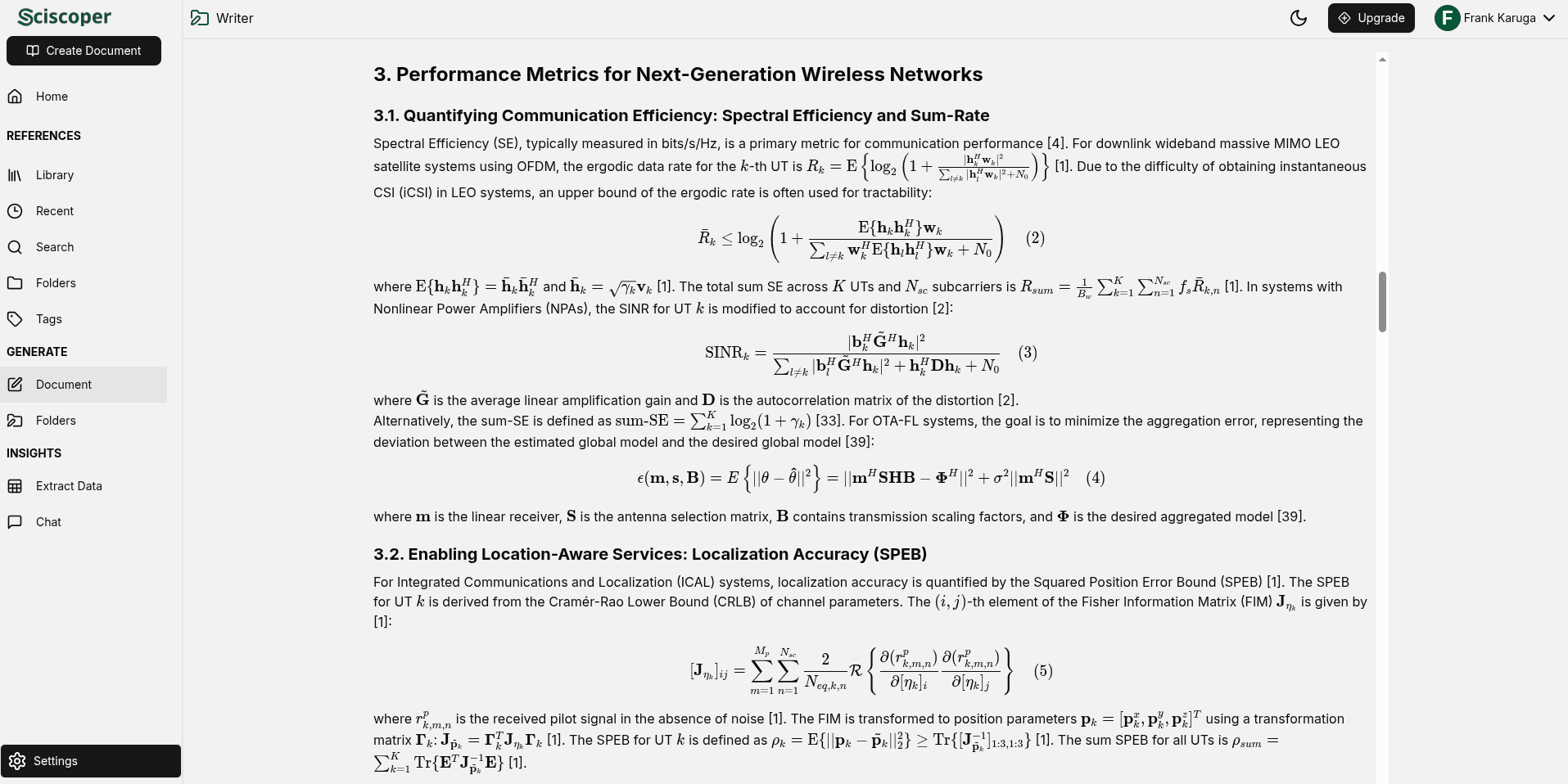
Sciscoper is an AI-powered research companion that supports the full spectrum of scholarly inquiry, from exploratory literature reviews to rigorous systematic reviews and meta-analyses. It automates the discovery, screening, and analysis of research papers, enables structured data extraction using established frameworks such as IMRAD and PICO, and manages references throughout the research lifecycle. By synthesizing evidence across studies and surfacing meaningful patterns and insights, Sciscoper helps researchers conduct high-quality evidence synthesis and arrive at conclusions more efficiently.
Features
AI Literature Review Synthesizes insights across multiple research papers to identify key themes, emerging trends, and gaps in the literature. It helps researchers understand the broader landscape of a field rather than individual studies in isolation.
Insight Extraction Identifies significant findings, methodologies, and relationships between studies. This supports deeper critical analysis and evidence-based reasoning.
Reference Management Automatically extracts and generates comprehensive bibliographic metadata for research publications. It enables users to add structured notes, annotations, tags, and custom fields to systematically organize, classify, and contextualize references within their research library.
Semantic Search Allows natural-language queries to retrieve conceptually relevant research beyond exact keyword matches. This improves discovery of related and interdisciplinary studies.
Knowledge Base Transforms collections of research papers into a structured, searchable knowledge repository. The knowledge base evolves as new documents and insights are added.
Article Summarization Produces clear, context-aware summaries that highlight core arguments, methods, and contributions. This enables faster evaluation and comparison of research papers.
Pros Comprehensive AI-Assisted Research: Automates literature discovery, screening, and synthesis to accelerate both traditional and systematic reviews.
Structured Data Extraction: Supports IMRAD and PICO frameworks, enabling consistent extraction of study details for evidence synthesis and meta-analysis.
Semantic Search & Insight Discovery: Natural-language search and cross-study insight extraction help uncover relevant research that keyword searches might miss.
Reference and Knowledge Management: Built-in tools for bibliographic metadata, annotations, tagging, and knowledge base organization keep research contextually coherent and traceable.
Time Savings: Reduces manual effort in screening, summarization, and reference handling, helping researchers focus on interpretation and analysis. Cons Limited Free Plan: The free tier allows only two literature reviews per month, which may be restrictive for coursework or exploratory research. PDF format only; you can only upload PDFs as other document are not supported.
2. Elicit
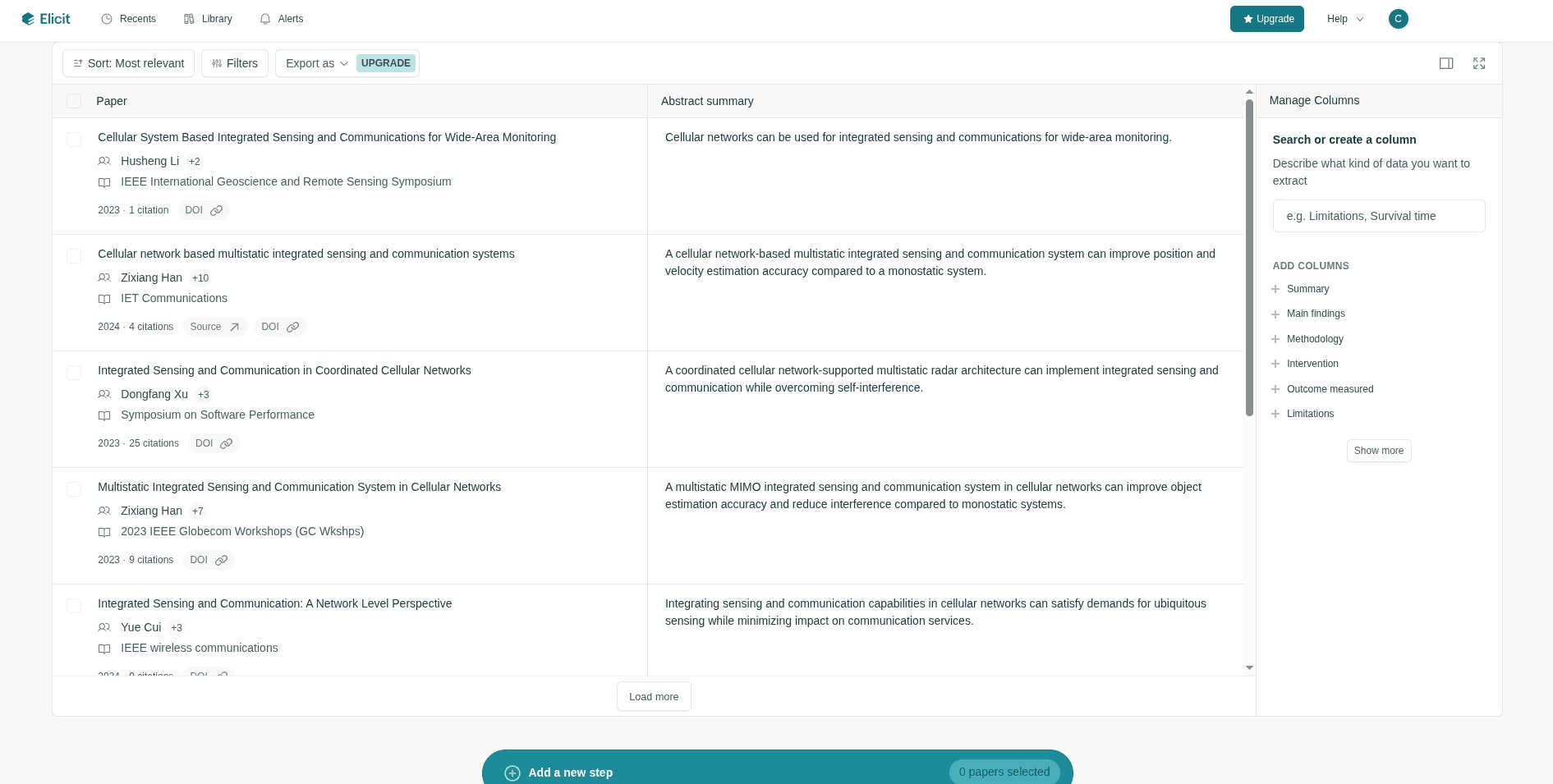
Elicit is an AI research assistant designed specifically for evidence synthesis and systematic review workflows. Using natural language processing, Elicit helps researchers find, analyze, and extract data from academic papers at scale. The platform emphasizes transparency and source-backed answers, with features tailored to the rigorous demands of systematic reviews, meta-analyses, and evidence-based research synthesis.
Features
Literature Search and Ranking Scans a database of over 125 million academic papers to find the most relevant ones for your query, highlighting key findings from each paper to help identify useful evidence quickly with relevance scoring.
Structured Evidence Summaries Presents results in summary tables showing outcomes, sample sizes, interventions, and key results across top studies for fast comparison, with customizable table columns.
Automated Data Extraction Extracts specific data points from within papers based on your predefined criteria—perfect for systematic review data collection—with options for manual verification.
PDF Chat Upload PDFs and ask questions in plain English, receiving answers directly quoted from the original text with citations and page numbers for verification.
Systematic Review Workflow Support Offers specialized features for screening, prioritization, and categorization of papers, including deduplication, blinded screening setups, and inter-rater reliability checks.
Pros
Unparalleled for synthesis: The best tool for structured systematic review and meta-analysis across multiple papers consistently.
Systematic review optimized: Built with the needs of rigorous evidence synthesis in mind, following PRISMA and Cochrane methodology standards.
Source transparency: Always shows you which paper each piece of information came from, maintaining academic integrity and enabling verification.
Natural language interface: Ask research questions as you would phrase them conversationally, without learning complex Boolean search syntax.
Reduces manual labor: Automates the most time-consuming aspects of systematic reviews, potentially cutting weeks from project timelines.
Cons
Requires precise queries: Vague questions yield vague results; you need to know how to formulate effective research questions to get useful outputs.
Can be expensive: The most capable features are behind higher pricing tiers that may be prohibitive for individual researchers.
Learning curve: Maximizing its potential requires understanding systematic review methodologies and data extraction protocols.
3. Connected Papers
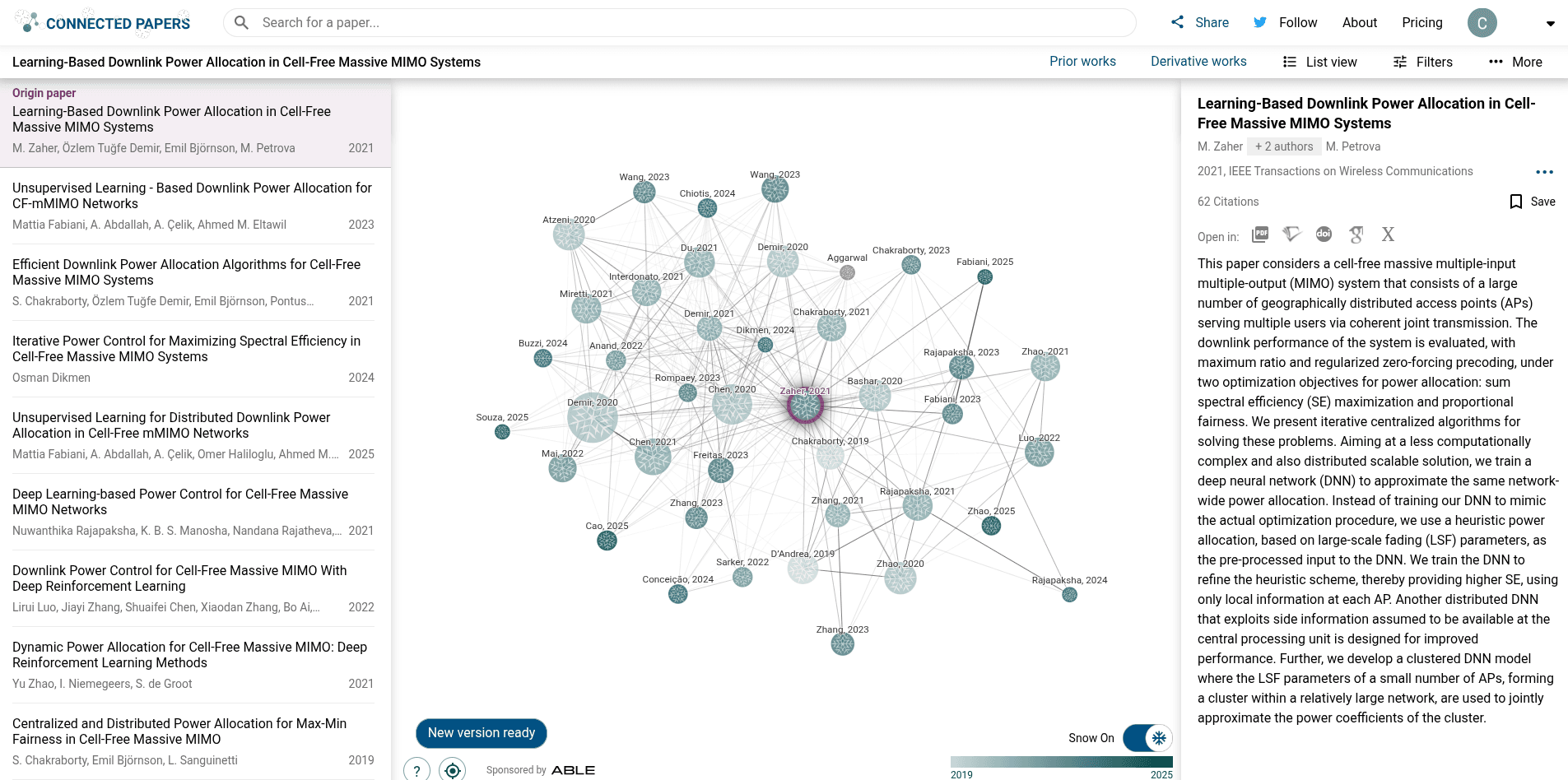
Connected Papers is a visual exploration tool that generates interactive graphs of academic papers based on their citation relationships. By inputting a single "seed paper," users can visualize the entire scholarly network surrounding that topic, seeing both foundational works and recent developments. The platform transforms complex citation networks into intuitive visual maps, making it easier to understand the intellectual landscape of any research area.
Features
Interactive Visual Graph Generation Creates a stunning, navigable graph where papers are represented as nodes and connections represent citation relationships or strong thematic similarity, with proximity indicating closer relationships.
Forward & Backward Citation Mapping Clearly visualizes both "prior works" (the intellectual predecessors) and "derivative works" (how the research evolved and was built upon) in an intuitive radial layout Key Paper Identification Algorithmically highlights foundational papers, major review articles, and highly influential works within the visual graph using node size and color coding. Cluster Analysis Groups related papers into clusters, often revealing sub-fields, methodological schools, or theoretical camps within a broader topic, making it easier to understand field structure. Graph Export Options Allows users to export visualizations as high-resolution images for presentations or publications, with customizable color schemes and layouts.
Pros
Intuitive visual learning: The graph format helps you understand complex academic relationships in minutes rather than hours of reading through citation lists. Excellent for literature review planning: Quickly identifies the must-include papers and reveals the overall structure of your field before you begin writing. Free tier is generous: Sufficient for most individual research projects, allowing several comprehensive graph generations. Great starting point: Provides immediate clarity when entering a new research area or unfamiliar topic. Identifies knowledge gaps: Visual clusters can reveal under-explored connections between research areas.
Cons
Static snapshot: The graph is generated from a point in time and doesn't auto-update as new papers are published. Limited to citation data: Relies on citation networks; might miss thematically related papers that don't cite each other directly. Can be computationally heavy: Generating graphs for very popular seed papers with thousands of connections can be slow and sometimes overwhelming.
4. ResearchRabbit
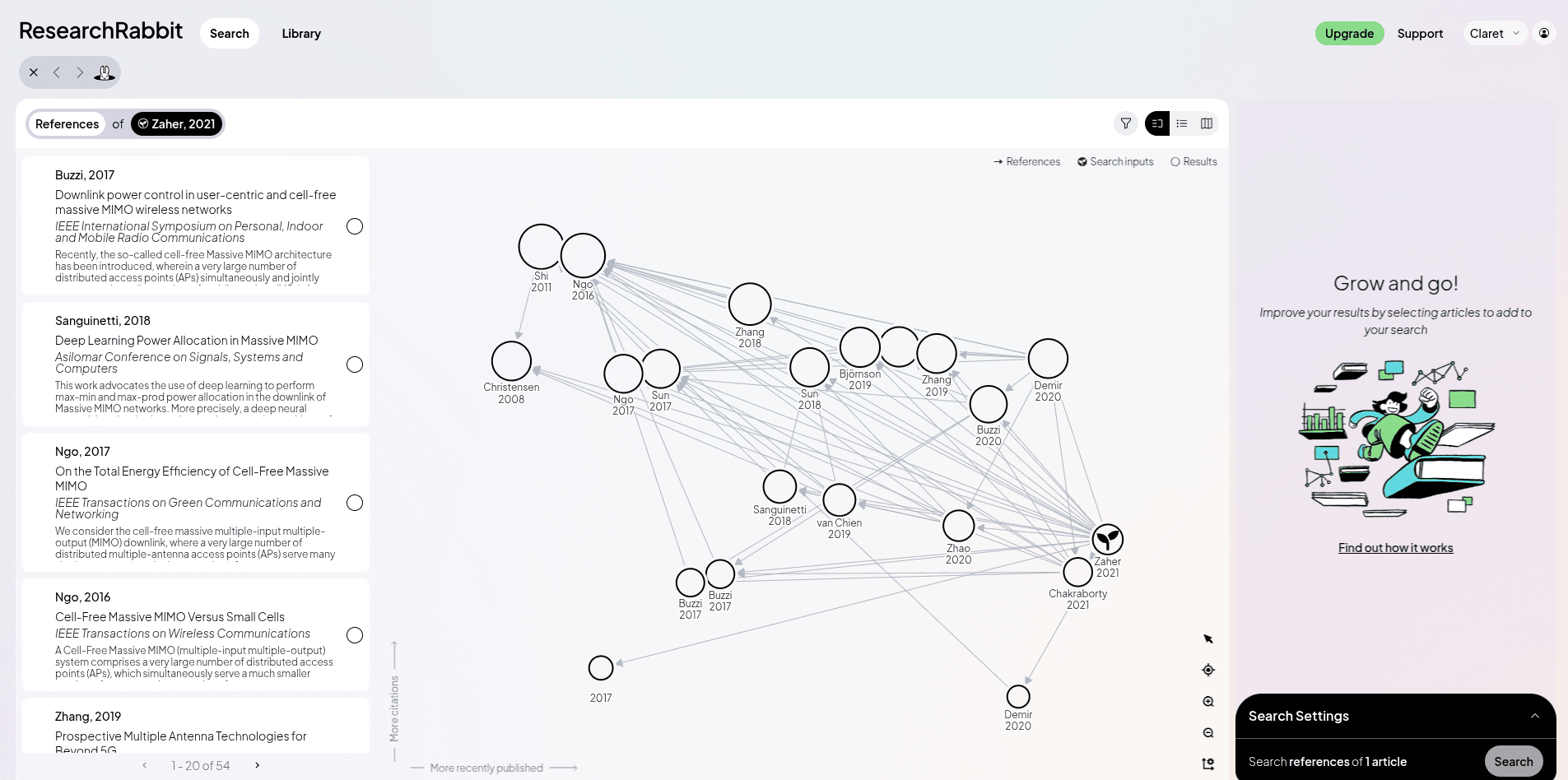
ResearchRabbit is a literature discovery platform that functions like a "Netflix for research papers," using sophisticated recommendation algorithms to help researchers find relevant literature. By creating collections of papers, users trigger personalized recommendations that uncover connections and related works they might otherwise miss. The platform emphasizes visual exploration and collaborative discovery, making literature review more intuitive and comprehensive.
Features
AI-Powered Recommendation Engine Analyzes your collections of papers and suggests new, thematically similar works based on content analysis, citation patterns, and metadata, going beyond simple citation tracking.
Timeline Visualization Displays your collection on an interactive timeline, showing the historical progression of ideas, methods, and findings in your field with filtering by year, author, or topic.
"Earlier Work" & "Later Work" Discovery Specialized features that help trace the intellectual lineage of papers, finding both foundational predecessors and recent developments that build upon key studies.
Collaborative Collection Building Easily share collections with collaborators who can add their own finds, comment on papers, and build shared knowledge bases with discussion threads.
Smart Search Integration Combines semantic search with citation network analysis to find papers that match both your keywords and your collection's thematic focus.
Pros
Excellent discovery tool: Uncovers papers that traditional search methods often miss, especially interdisciplinary connections and emerging research.
Great for exploratory phases: When you're not exactly sure what you're looking for, the recommendation engine can guide your exploration.
Visual and interactive: The timeline view provides a unique perspective on how research has evolved over decades.
Facilitates collaboration: Built from the ground up for shared literature discovery, making it ideal for research teams and lab groups.
Learning algorithm: Improves recommendations over time as you add more papers to collections.
Cons
Recommendation quality varies: The algorithm's suggestions can sometimes be too broad or slightly off-topic, requiring manual curation.
Primarily a discovery tool: Lends itself less to deep analysis, synthesis, or note-taking within the platform itself.
Mobile experience limited: The web interface is optimized for desktop; mobile viewing can be challenging with complex visualizations.
Database coverage: May not include all specialized or regional journals compared to major academic databases.
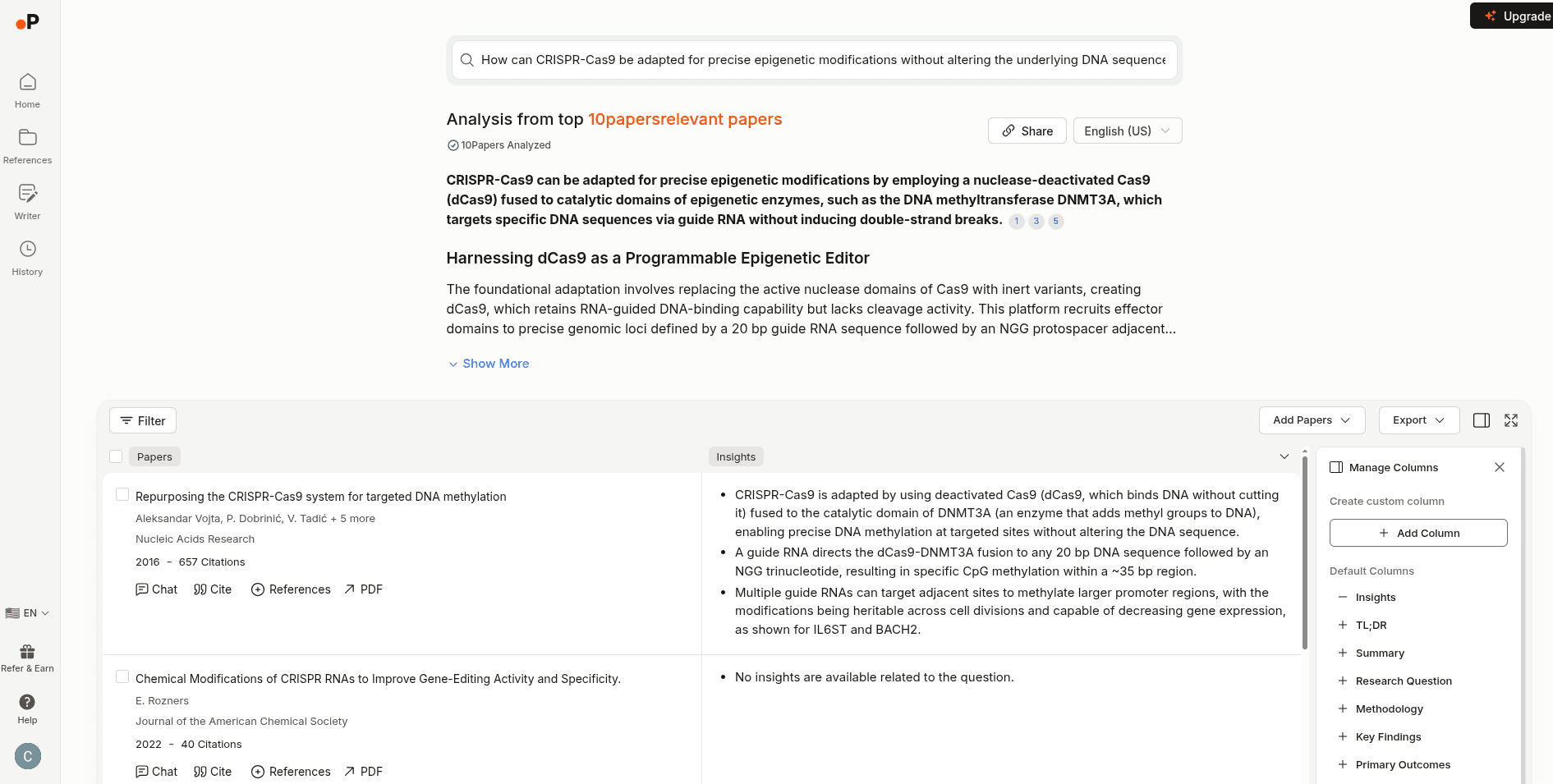
5. Paperguide
Paperguide is an AI-powered rapid assessment tool designed to help researchers quickly evaluate academic papers for relevance and quality. By analyzing papers via URL or DOI, Paperguide provides structured insights that answer critical questions about methodology, findings, and significance. The platform serves as a first-pass filter, enabling researchers to efficiently triage large volumes of literature without reading every paper in full.
Features
AI Search & Deep Research Uses semantic search across a database of over 200 million academic papers to answer complex research questions with synthesized, citation-backed answers. The "Deep Research" feature can automate systematic review workflows, generating comprehensive reports by screening and analyzing relevant papers.
Literature Review Generator Automatically creates a structured, customizable table that compares multiple papers with key data like methodology, key findings, and limitations, making synthesis and analysis much faster.
AI Summaries Generates instant, concise summaries of articles, papers, and even YouTube videos to quickly grasp key points.
Data Extraction Extracts and compares specific data points (e.g., effect sizes, methodology details) across hundreds of papers, which is especially useful for meta-analyses.
Chat with PDF Allows you to upload documents (PDF/DOCX) and interact with them via an AI chat. You can ask specific questions and receive precise, sourced answers from the content of your papers.
Reference Manager Organize papers via direct upload, DOI, URL, or import formats like BibTeX and RIS. It supports creating folders, tags, annotations, and offers one-way integration with Zotero.
AI Paper Writer Functions as a writing partner that uses your imported references as its knowledge base. It can generate initial drafts, introductions, conclusions, or continue your writing, ensuring all generated content is backed by sources and includes automatic in-text citations.
Pros
Massive time-saver: Cuts initial paper screening time by 80% or more during literature review phases.
Reduces entry barriers: Makes highly technical papers accessible, especially valuable for interdisciplinary researchers, graduate students, or those new to a field.
Improves decision-making: Provides structured data to make informed "include/exclude" decisions during systematic reviews or literature searches.
Easy to use: Extremely simple interface, just paste a URL or DOI without complex setup or configuration.
Cons
6. Scispace
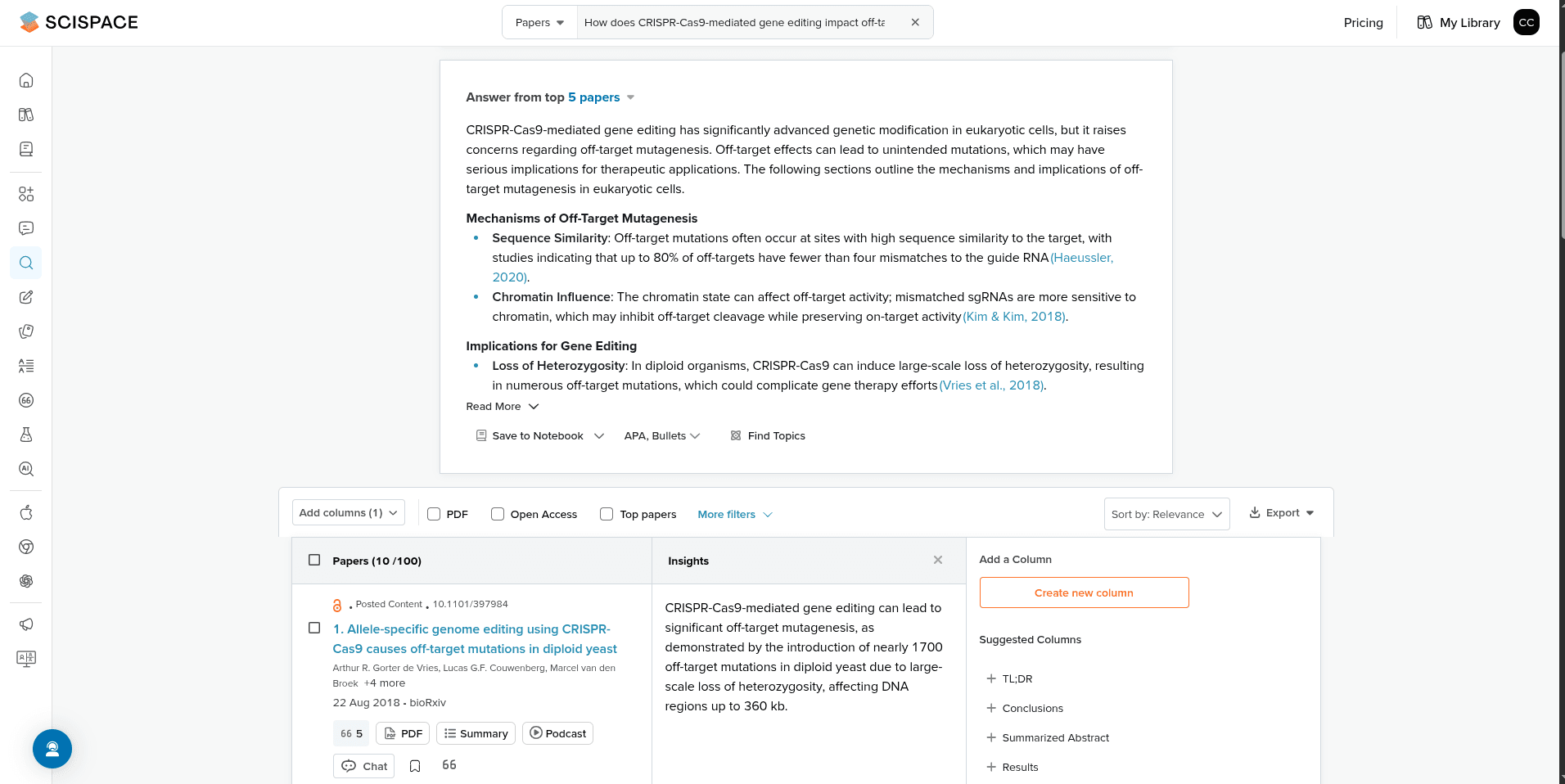
Scispace is an AI-powered research platform that helps academics manage, write, and publish their work more efficiently. The Scispace AI research assistant can simplify the literature search and review process by helping you find research papers based on topics or user queries and extracting key insights from PDFs. In addition to this, SciSpace also has an AI writer, citation generator, paraphraser, and AI detector to help streamline your academic writing and publication workflow.
Features
Conversational AI with PDFs Upload a PDF and ask questions directly to the document: "Explain the methodology," "What are the limitations?", "How does this compare to X paper?" with answers backed by specific passages from the text.
AI-Driven Semantic Search & Literature Discovery Helps draft literature review sections by suggesting connections between papers, identifying contrasting findings, and proposing structural frameworks based on analysis of multiple sources.
Multi-Paper Synthesis Queries Ask questions across multiple uploaded papers simultaneously: "What are the common methodologies in these five studies?" or "Identify conflicting conclusions here" with comparative analysis tables.
AI-Driven Semantic Search & Literature Discovery Search across hundreds of millions of academic papers using AI that understands context, not just keywords.
AI Writing AI Writer suggests text, drafts sections of papers, helps structure content, and improves clarity. Includes AI-powered paraphrasing, grammar checking, style suggestions, and plagiarism detection integrated directly with the research workflow.
Pros
Deep engagement with texts: Facilitates a much more active and critical reading process through interactive questioning of documents.
Excellent for synthesis: Helps identify patterns, contradictions, and gaps across multiple papers through comparative analysis features.
Writing assistance: Can help overcome writer's block and structure literature review sections with coherent arguments and transitions.
Saves note-taking time: Extracts key information and explanations directly from the text, organizing findings for easy reference.
Comprehensive platform: Combines research, writing, and citation management in a single ecosystem, reducing tool switching.
Cons
Subscription costs: Full functionality requires paid plans that may be expensive for students or independent researchers with it's Advanced plan going for $90 monthly.
7. Litmaps
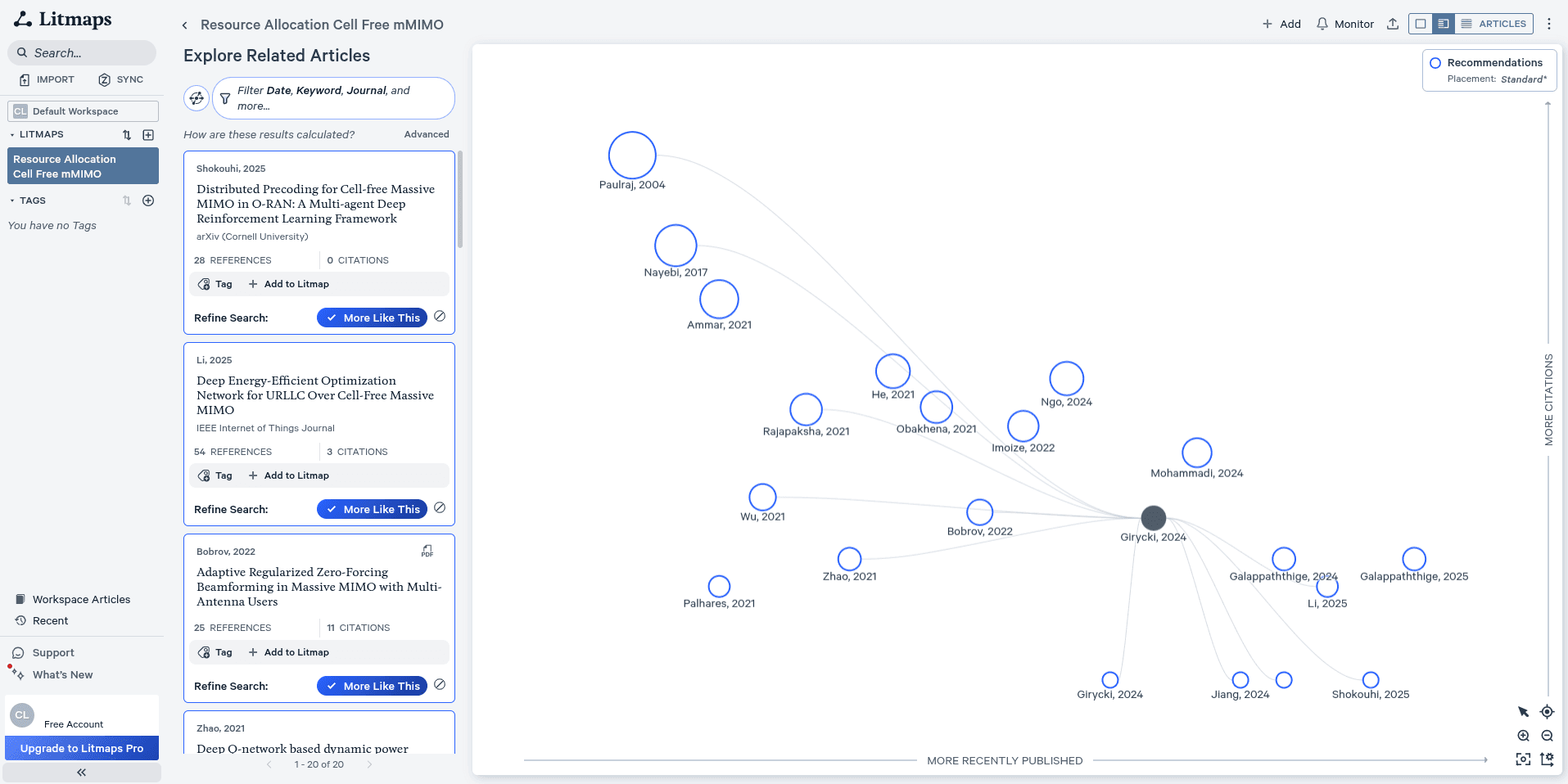
Litmaps is a dynamic citation mapping tool that helps researchers discover and visualize connections between academic papers through forward and backward citation tracking. Unlike static visualization tools, Litmaps creates living maps that can grow and update as new research is published, with special emphasis on identifying recent, influential papers that are gaining traction in their fields.
Features
Visualization (Litmaps) It automatically creates a visual map (a "Litmap") of research papers based on their citation network, showing how articles connect to one another.You can customize the visualization by changing axes to sort papers by references, citations, connectivity, or date.
Citation-Based Search Litmaps searches a catalogue of over 270 million papers, using citations and references to find the most relevant articles and spot papers that might be missed with traditional keyword searches.
Seed Map Generation Starts with a small set of papers and finds the most relevant connecting works through co-citation analysis, highlighting the strongest relationships and creating interconnected networks.
Discovery Map Creation Input research topics or keywords to generate maps that identify key papers and visually show their connections, with special algorithmic emphasis on recent (2024-2025) publications showing citation velocity.
Alert System for Literature Monitoring Customizable email notifications when new papers are published that connect to your existing maps, ensuring your literature review remains current throughout long writing processes.
Recent Literature Prioritization Algorithms specifically designed to identify papers from the last 1-2 years that are gaining rapid citation traction, helping researchers spot emerging trends.
Citation Timeline Visualization Shows how citation patterns have evolved over time, indicating when certain papers gained prominence and how influence has shifted between research groups or theories.
Pros
Forward-looking: Particularly good at finding recent, influential papers that haven't yet accumulated massive citation counts but show early signs of importance.
Dynamic and updating: Unlike Connected Papers' static graphs, Litmaps can grow and update as new research is published, with optional notifications.
Excellent for staying current: The alert system helps maintain literature review freshness throughout dissertation writing or long-term research projects.
User-friendly interface: Clean, intuitive design makes complex citation networks accessible without technical expertise.
Focus on emerging research: Specialized algorithms for identifying "sleeping beauties" and early trendsetters in academic literature.
Cons
Overemphasis on recency: May undervalue older foundational papers that remain highly relevant to current research questions.
Limited free queries: The free tier is more restrictive than some competitors, with only 1-2 map generations monthly.
Smaller database: May not index as many obscure or field-specific journals as larger platforms like Google Scholar or Scopus.
Cost barrier: Most useful features require subscription, which may be prohibitive for unfunded researchers or students.
8. Consensus
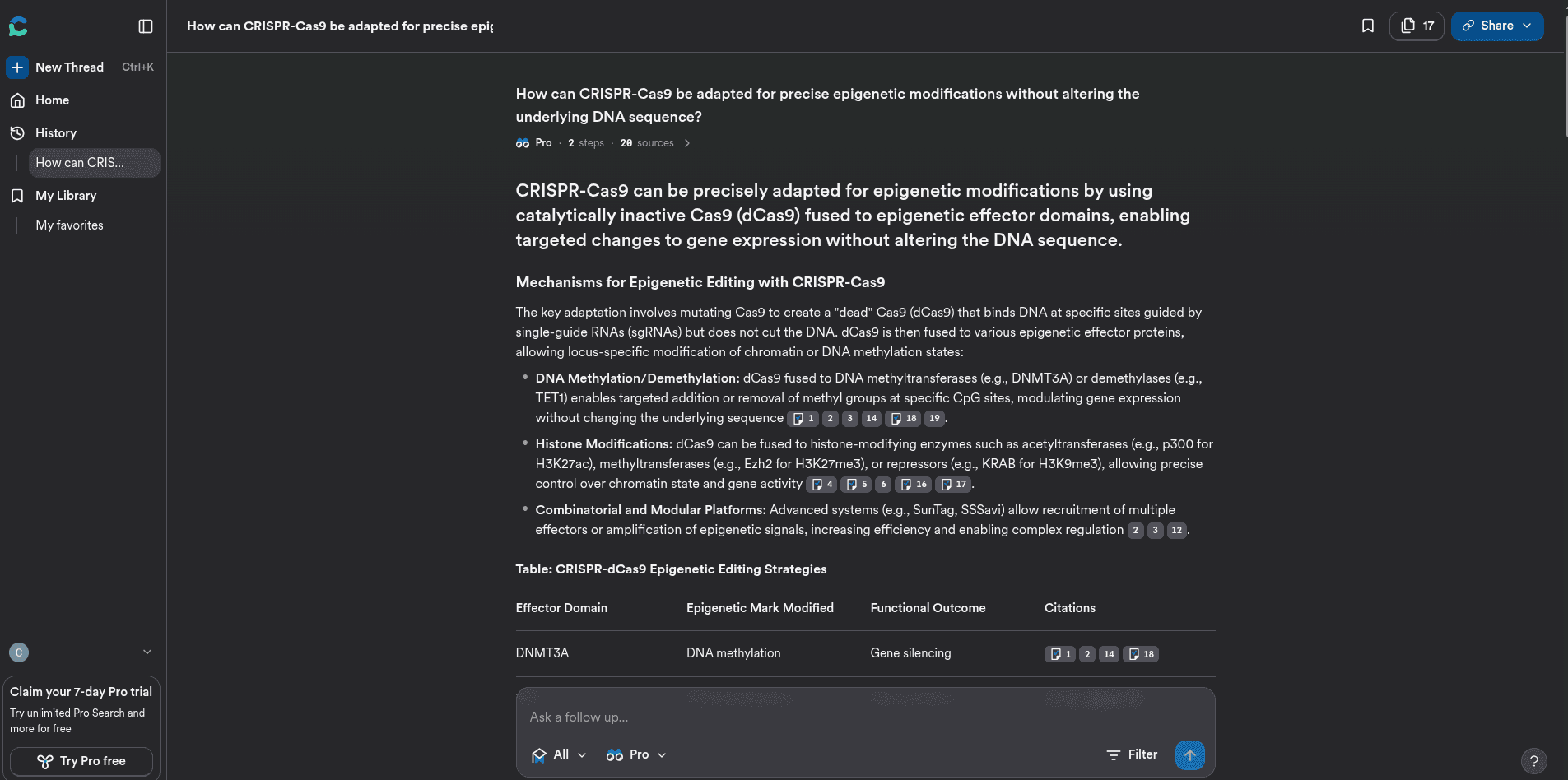
Consensus is an AI-powered search engine that extracts and synthesizes findings directly from scientific research. Unlike traditional search engines that return lists of papers, Consensus reads and analyzes full texts to provide direct answers to research questions, complete with citations and confidence scores. The platform is specifically designed to help researchers, healthcare professionals, and students quickly find evidence-based answers without reading dozens of papers.
Features
Evidence-Based Answers Provides direct answers to research questions by analyzing full texts of scientific papers, citing specific studies and indicating the strength of evidence behind each answer.
Consensus Meter Visual indicator showing the level of agreement or disagreement in the scientific literature on specific questions, based on analysis of multiple studies' findings.
Study Quality Indicators Automatically assesses and displays the quality of evidence for each cited study, including sample sizes, study designs (RCT, observational, etc.), and publication venue impact.
Medical & Health Focus Particularly strong in biomedical and health sciences, with specialized understanding of clinical trial data, treatment efficacy, and medical intervention outcomes.
Citation Extraction & Verification Extracts exact quotes and data points from papers to support answers, with links to original sources for verification and deeper reading.
Pros
Time-efficient evidence synthesis: Provides synthesized answers in seconds that might take hours or days of manual literature review.
Transparent sourcing: Always shows which papers support each answer, with direct quotes and study details for verification.
Medical reliability: Particularly accurate for clinical and biomedical questions, with understanding of study hierarchies and evidence quality.
Consensus visualization: The consensus meter helps quickly understand where scientific agreement exists and where controversy persists.
Clinical decision support: Can be used by healthcare professionals for evidence-based decision making at point of care.
Cons
Domain limitations: While excellent for biomedical sciences, less comprehensive for social sciences, humanities, or some engineering fields.
Oversimplification risk: Complex scientific debates may be reduced to binary answers, potentially missing nuance and context.
Subscription costs: Full functionality requires paid access, which may be prohibitive for individual researchers or students.
Database coverage gaps: May not include all specialty journals or non-English publications, potentially missing relevant evidence.
9. Scholarcy
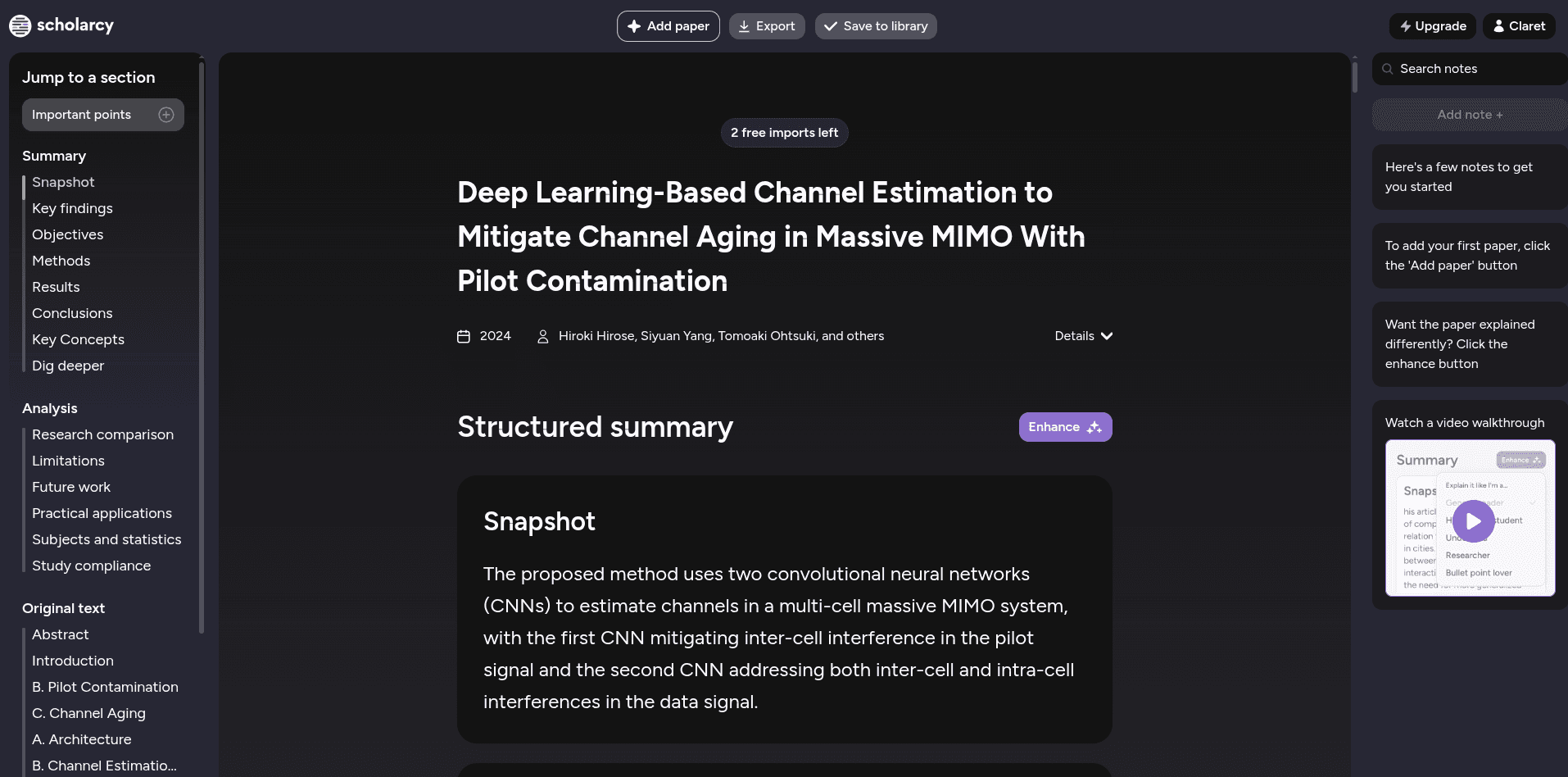
Scholarcy is an AI-powered summarization tool that transforms long academic papers into interactive summary flashcards. It rapidly parses PDFs and scholarly articles to extract key findings, methodologies, figures, and references, presenting them in a navigable and digestible format. This approach drastically reduces the time required to review large volumes of literature, while the interactive flashcard design supports quick review and better retention of core ideas.
Features
Interactive Summary Flashcards Automatically breaks down a paper into structured sections such as Key Findings, Methodology, Results, and Conclusions Robo-Highlighter Automatically highlights the most important phrases and claims in a document to speed up skim-reading. Literature Matrix One of its standout features for researchers; it can export summaries of multiple papers into an Excel spreadsheet, allowing for side-by-side comparison of different studies' methods and results. Research Quality Indicator Provides an assessment of a paper’s reliability based on its methodology, sample size, and source credibility. Reference & Table Extraction Extracts all citations and allows you to download them as a bibliography (RIS or BibTeX). It can also pull tables and figures from PDFs and convert them into Excel format. Dig Deeper & AI Chat Allows users to ask specific questions about the text or request simpler explanations for complex concepts. Browser Extensions Available for Chrome and Edge, allowing you to summarize articles and papers directly from your browser.
Pros Time Efficiency: Users report reducing reading and screening time by up to 70%, making it ideal for the initial stages of a literature review. Accessibility Support: Highly praised by students with dyslexia or ADHD for breaking walls of text into digestible, structured "bite-sized" chunks. Superior Organization: The "Scholarcy Library" allows you to save, folder, and search through all your summarized papers in one place. Integration: Works seamlessly with reference managers like Zotero and note-taking apps like Notion, Obsidian, and Roam. Fact-Based Summarization: Unlike general AI (like ChatGPT), it emphasizes extracting information directly from the source text, reducing the risk of "hallucinations."
Cons Limited Free Version: The free tier is quite restrictive (often limited to 3 summaries per day), and core features like the Library and Literature Matrix require a paid subscription. Subscription Cost: While competitive, the $9.99/month cost can be a hurdle for students on a tight budget. Complexity for New Users: The interface is feature-rich but can feel cluttered or overwhelming for those who just want a simple one-click summary. Inconsistency in Non-Academic Text: It is specifically tuned for academic structure; it performs poorly on creative writing, legal documents, or highly technical niche subjects that don't follow standard research formats. No Mobile App: Currently, it is primarily web-based and lacks a dedicated mobile application for reading on the go.
10. AnswerThis
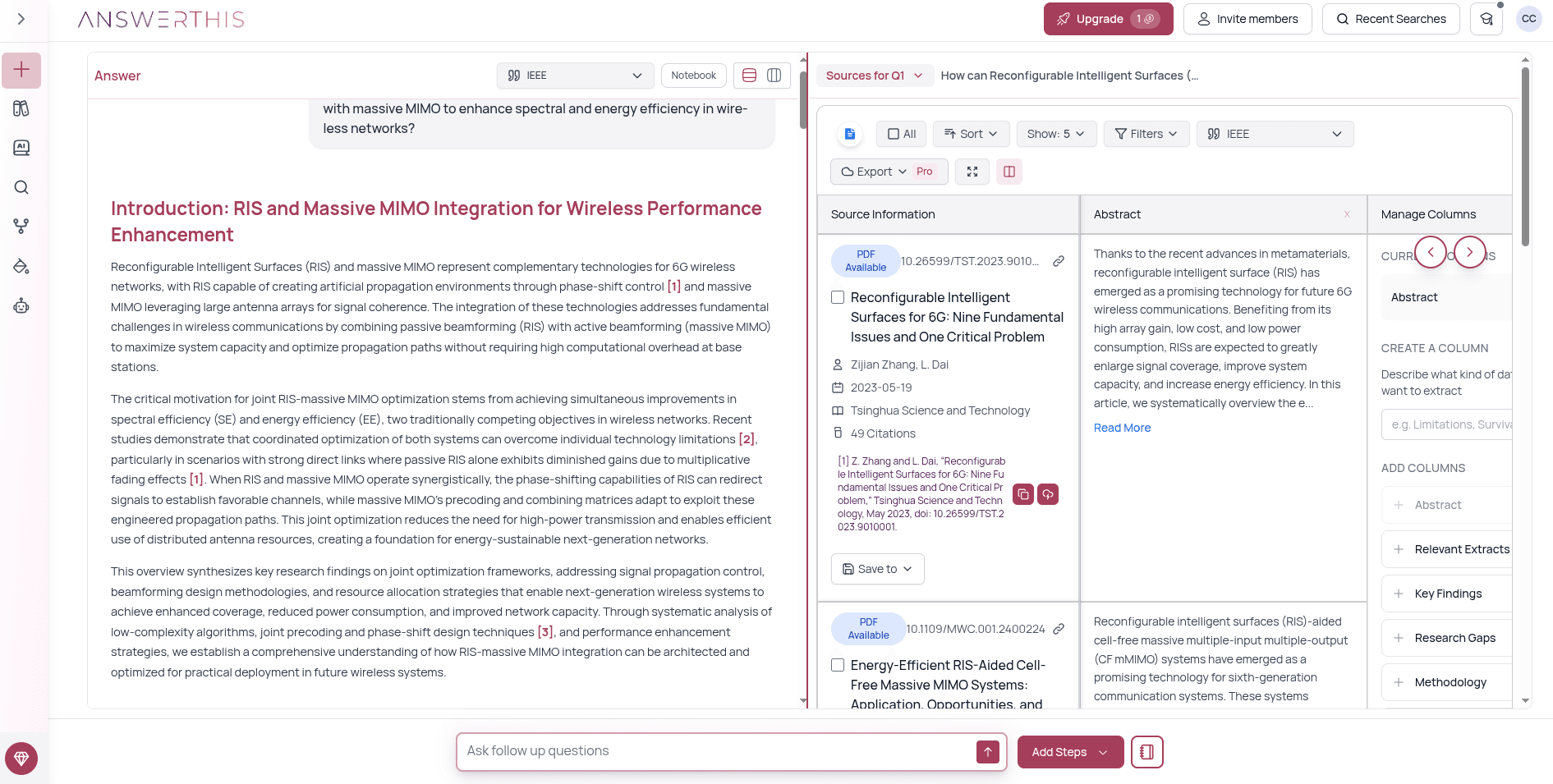
AnswerThis is an AI-powered research question platform that helps researchers formulate precise, answerable questions and connects them with relevant academic literature. The tool specializes in breaking down complex research problems into structured questions and identifying the most relevant papers and data needed to answer them. It serves as both a question-refinement tool and a literature discovery platform, particularly useful in the early stages of research design.
Features
AI Writer Helps researchers transform vague research interests into precise, answerable questions using AI-guided questioning techniques and research methodology frameworks.
Citation Map shows how studies connect, helping researchers cut through endless references and quickly spot the most influential research papers.
Bibliometric Analysis Get a data-driven look at how scholarship changes over time. It shows how to spot patterns in publications, citations, and author impact so you can see where the field has been and where it is heading..
Literature Review Creates a thorough, impressively detailed literature review instantly while providing accuracy, understanding, and relevance.
Custom Tools Provides tools that identify research gaps, generate essay drafts, and create peer reviews tailored to your workflow.
Pros
Improves research question quality: Helps formulate clearer, more focused research questions that are more likely to yield meaningful results.
Methodological guidance: Particularly valuable for early-career researchers or those entering new methodological areas.
Gap identification: Effectively highlights where new research is needed rather than just summarizing what's already known.
Cons
Early-stage focus: Primarily useful for research design phase; less valuable for later stages like systematic review and meta analysis.
Cost barrier: Advanced features require subscription, which may be difficult for unfunded researchers or students.