8 Best Academic Discovery Tools for Researchers
Tue Dec 09 2025
Francis Michael

Introduction
For researchers, abundance has replaced scarcity. Databases like Google Scholar put millions of papers within reach. The current challenge is not about finding academic articles, but vetting quality, synthesizing insights, and connecting ideas efficiently.
This is the era of semantic understanding and AI-driven discovery. In this definitive guide, we’ll explore the best AI academic search tools that are transforming literature reviews, from systematic review tools to visual network mappers, helping you navigate the future of research.
Intelligence Synthesis Engines
These platforms represent the most significant leap beyond traditional search. Rather than returning lists of potentially relevant papers, they deploy Large Language Models (LLMs) trained on academic literature to provide direct, evidence-backed answers and structured data extraction.
1. Elicit
Elicit's transformation of research methodology warrants deep examination. Unlike traditional tools that simply help you find papers, Elicit fundamentally changes how you process them.
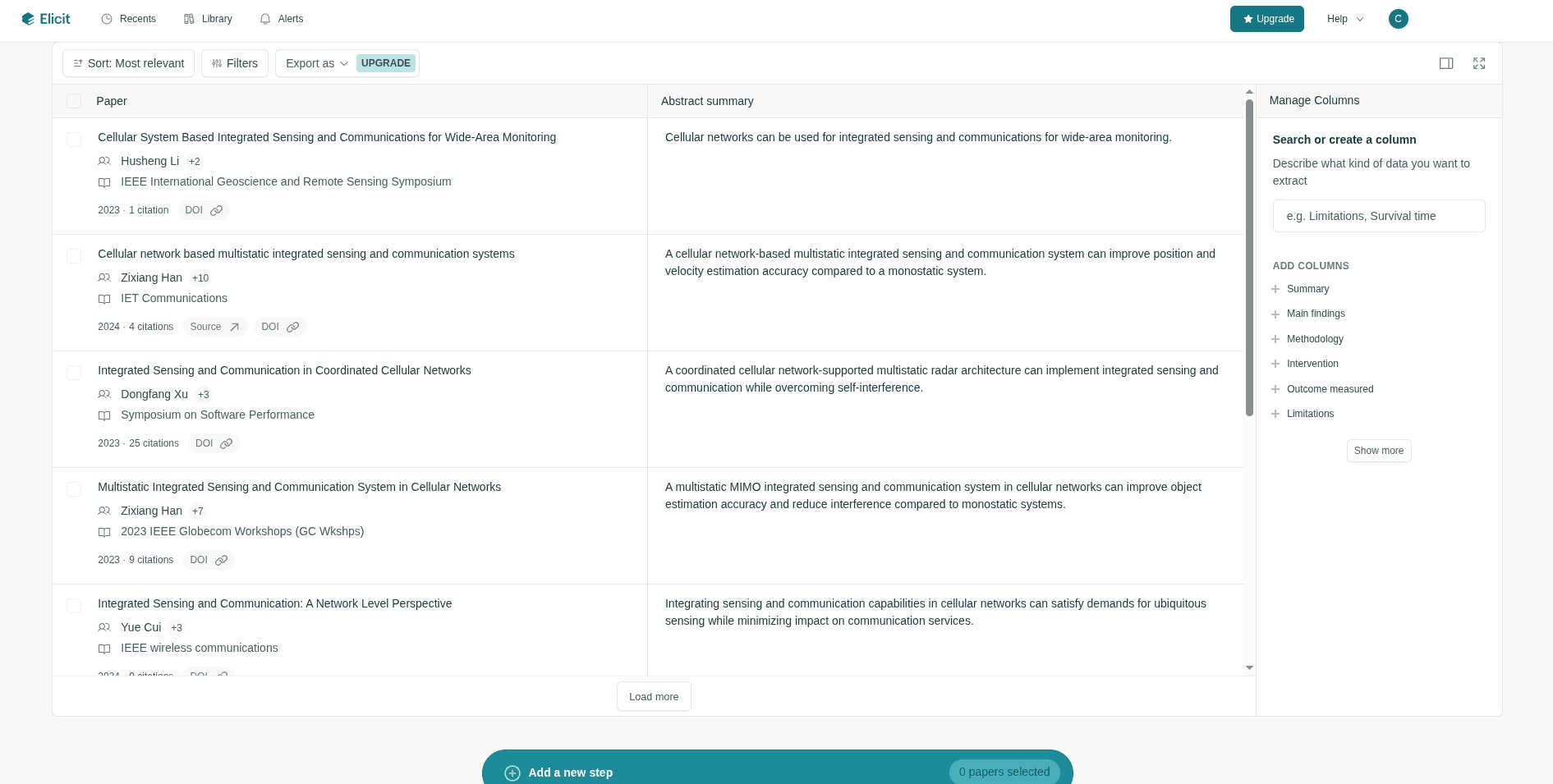
Core Innovation: The evidence matrix is more than a convenient feature—it represents a paradigm shift in literature analysis. By automatically extracting data points (methodology, sample size, key findings, limitations) from dozens of papers simultaneously, Elicit collapses weeks of manual data extraction into hours.
Strategic Applications:
Comparative Methodology Analysis: Upload 30 papers on a specific intervention and generate an immediate comparison table of their research designs, controls, and statistical approaches.
Rapid Gap Identification: Use the extracted "limitations" columns across multiple papers to quickly identify consistent methodological weaknesses in the existing literature.
Background Section Automation: The "Research Report" mode can draft a coherent literature summary with proper citations, though it requires careful verification and scholarly augmentation.
Critical Implementation Insight: Elicit's effectiveness depends entirely on prompt engineering sophistication. The difference between "papers about depression treatment" and "randomized controlled trials comparing CBT to medication for major depressive disorder in adolescents, focusing on remission rates and dropout rates" is the difference between superficial results and targeted, usable evidence. Advanced researchers use multi-step prompting strategies, often extracting different data sets with different prompts before synthesizing manually.
Limitation Navigation: Elicit can occasionally surface lower-quality papers that happen to match semantic patterns. The 2026 researcher must maintain the traditional skill of source evaluation, checking journal impact, author credibility, and methodological rigor despite the automation.
2. Consensus
Where Elicit organizes, Consensus adjudicates. It addresses the most fundamental scholarly question: "What does the scientific literature actually say about X?"
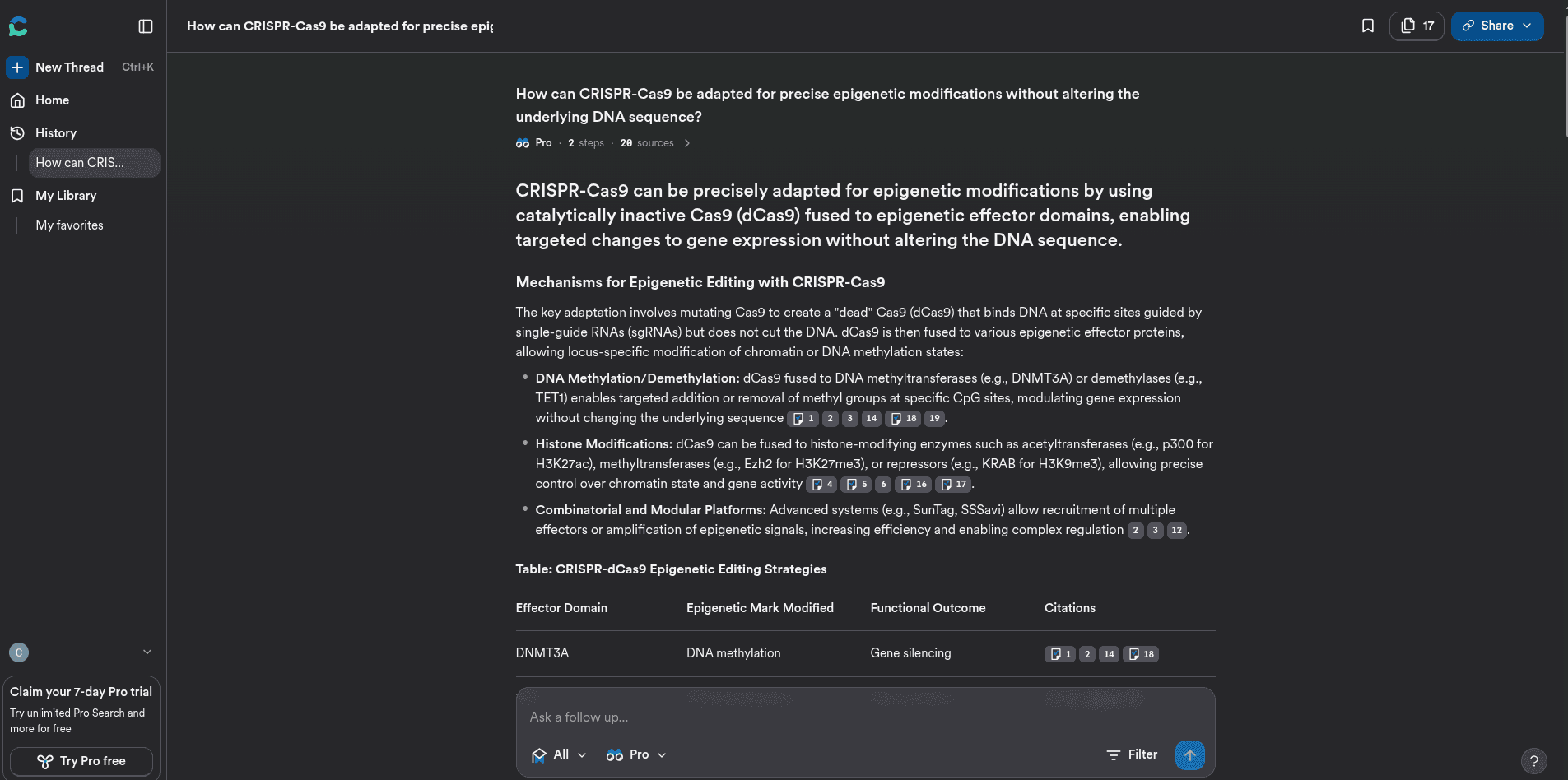
Core Innovation: The "Consensus Meter" isn't just a feature—it's a new form of scholarly meta-analysis in real-time. By quantifying agreement across studies, it provides something citation counts never could: a measure of scientific convergence.
Strategic Applications:
Hypothesis Validation Before Experimentation: Test whether your proposed research question already has a clear answer in the literature, potentially saving months of unnecessary work.
Clinical Decision Support: For medical researchers and clinicians, Consensus provides rapid, evidence-graded answers to specific therapeutic questions with direct links to supporting RCTs and meta-analyses.
Policy Brief Drafting: Quickly generate evidence summaries on controversial topics (e.g., "effectiveness of school mask mandates") with transparent source linking.
Critical Implementation Insight: Consensus operates most effectively on questions with empirically testable answers. Open-ended exploratory questions ("What are the implications of quantum computing for cryptography?") yield less valuable results than specific, answerable queries ("Has quantum annealing demonstrated speed advantages over classical optimization algorithms for protein folding problems?").
The Verification Imperative: While Consensus cites specific sentences, the sophisticated researcher in 2026 always clicks through to read the full context. The tool excels at finding evidence, but interpreting nuance, methodological limitations, and contradictory findings still requires human scholarly judgment.
3. Sciscoper
Sciscoper redefines how researchers approach literature synthesis and evidence discovery. Beyond simply locating papers, it transforms the way knowledge is extracted, organized, and analyzed across vast research domains.
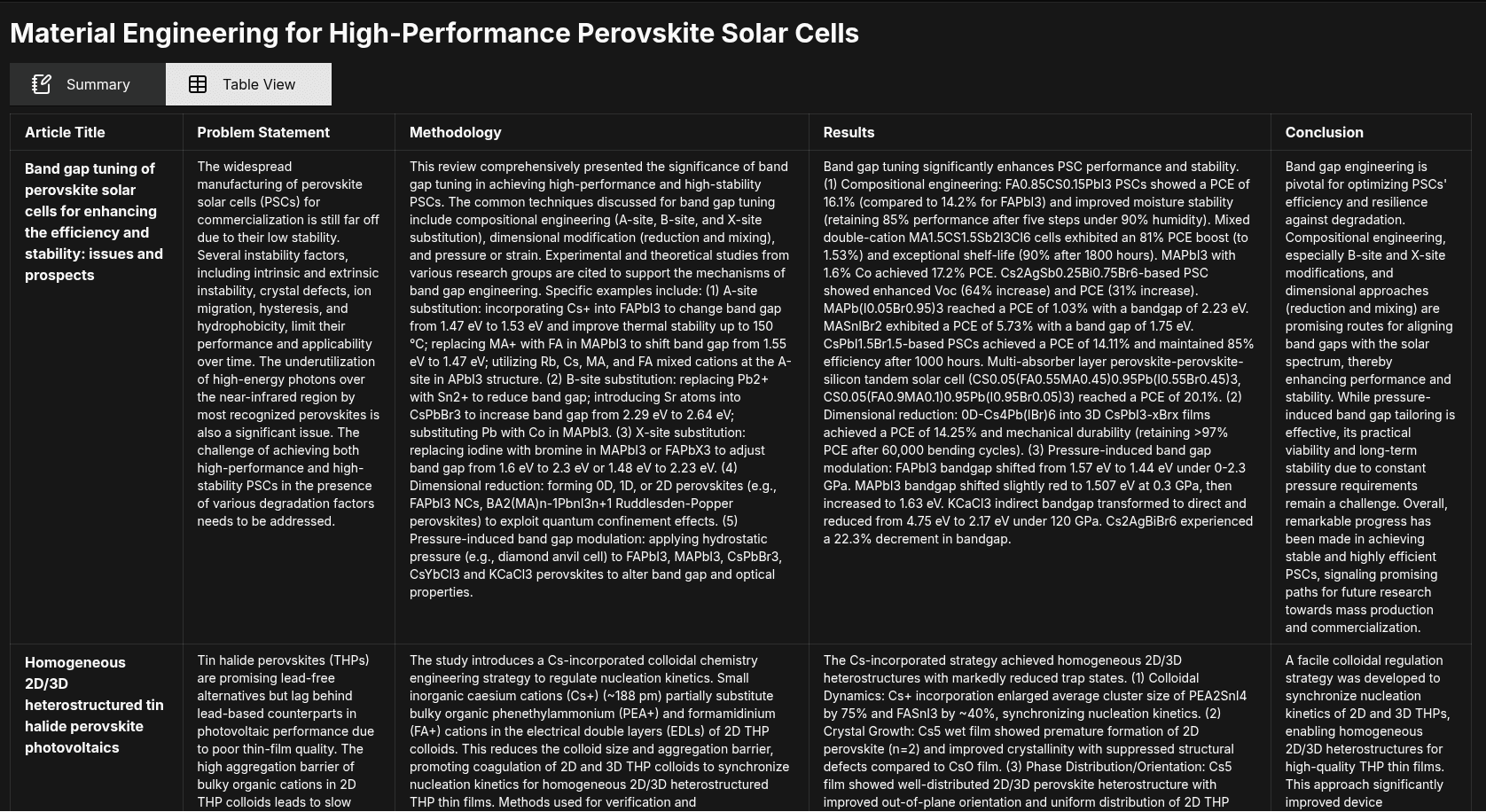
Core Innovation: Sciscoper automates the entire research review workflow, from structured data extraction to comparative analysis. By leveraging AI to parse methodologies (IMRAD), interventions (PICO), results, and limitations, it collapses the traditionally labor-intensive processes of systematic reviews and meta-analyses into a fraction of the time. Features like PRISMA-compliant reporting and Cochrane-style review frameworks ensure outputs are aligned with academic rigor, making Sciscoper not just a tool but a research companion.
Strategic Applications:
Systematic Review Acceleration: Upload hundreds of papers, and Sciscoper extracts study designs, outcomes, and critical data points automatically, producing structured tables ready for synthesis.
Meta-Analysis Preparation: By standardizing extracted effect sizes, sample sizes, and statistical parameters, researchers can immediately feed the data into meta-analytic models.
Gap and Trend Identification: Aggregate limitations and findings across studies to quickly pinpoint underexplored areas or recurring methodological weaknesses.
Automated Reporting: Draft literature review sections, evidence summaries, and PRISMA flow diagrams that are coherent and ready for refinement.
Critical Implementation Insight: Sciscoper’s utility scales with the specificity of user input. Queries like “papers on depression treatment” yield broad overviews, while “RCTs comparing CBT and SSRIs in adults with major depressive disorder, reporting remission rates and dropout statistics” produce precise, actionable insights. Advanced users often engage multi-step extraction strategies to separately capture methods, results, and bias assessments before synthesis.
Limitation Navigation: While Sciscoper streamlines evidence processing, it cannot fully replace traditional scholarly judgment. Users must still critically evaluate study quality, journal reputation, and methodological soundness. Free-tier limitations (two reviews per month) and restricted access to systematic review features on lower plans may require careful workflow planning for heavy users.
Intellectual Cartography Platforms
These tools address the spatial and temporal dimensions of scholarship—how ideas connect across papers and evolve over time. They transform the literature from a collection of discrete documents into a navigable knowledge landscape.
4. ResearchRabbit: The Personalized Discovery Network
The "Spotify for papers" analogy understates ResearchRabbit's sophistication. Its core innovation is collaborative filtering adapted to scholarly contexts: "Researchers who found this paper seminal also found these other papers important."
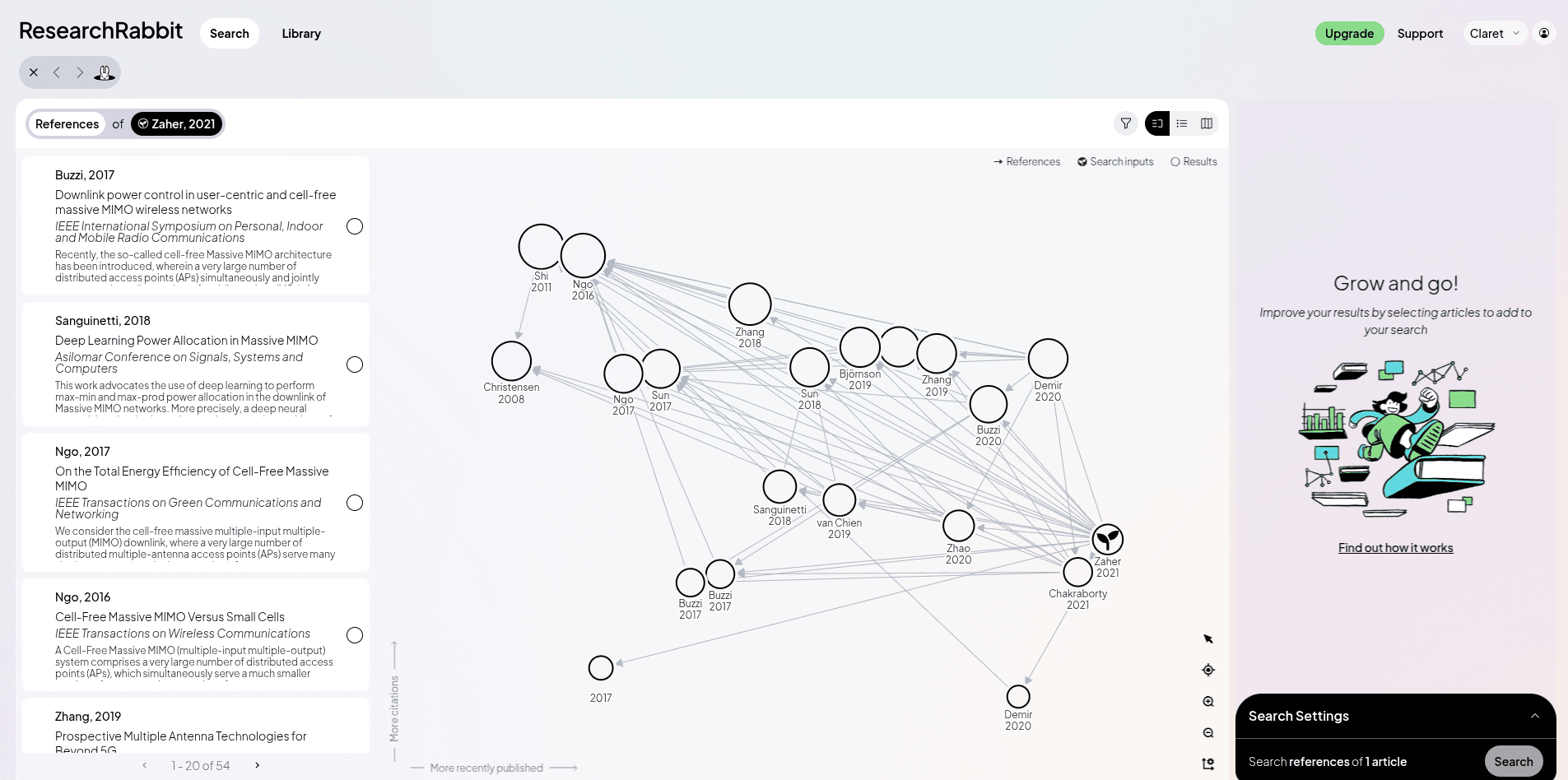
Core Innovation: The dynamic visualization of paper-paper, paper-author, and author-author relationships creates a unique discovery experience. Unlike static citation trees, ResearchRabbit's maps adapt to your preferences, highlighting connections you might have missed through traditional search.
Strategic Applications in 2026:
Intellectual Genealogy Mapping: Trace how a concept has moved between research groups by visualizing author networks and their co-citation patterns.
Cross-Disciplinary Bridge Discovery: Find papers that connect disparate fields—a crucial skill for innovation in increasingly interdisciplinary research environments.
Comprehensive Examination Preparation: For PhD candidates, building a ResearchRabbit collection around dissertation topics ensures no seminal work is missed while illustrating the field's structure to committees.
Critical Implementation Insight: The quality of ResearchRabbit's recommendations depends heavily on seed paper selection. Starting with an obscure, poorly-cited paper yields limited discovery potential. Strategic users begin with 3-5 established, highly-cited papers in their subfield to "train" the recommendation algorithm before adding more niche works.
Visual Literacy Requirement: Interpreting these networks is a skill in itself. Dense clusters may indicate established paradigms, while isolated papers might represent novel approaches or dead ends. The size of nodes (citation count) doesn't always equate to importance—some revolutionary papers take years to gain recognition.
5. Litmaps: The Temporal Landscape Mapper
If ResearchRabbit shows connections, Litmaps shows evolution. Its unique contribution is visualizing how ideas develop, branch, and sometimes converge over time.
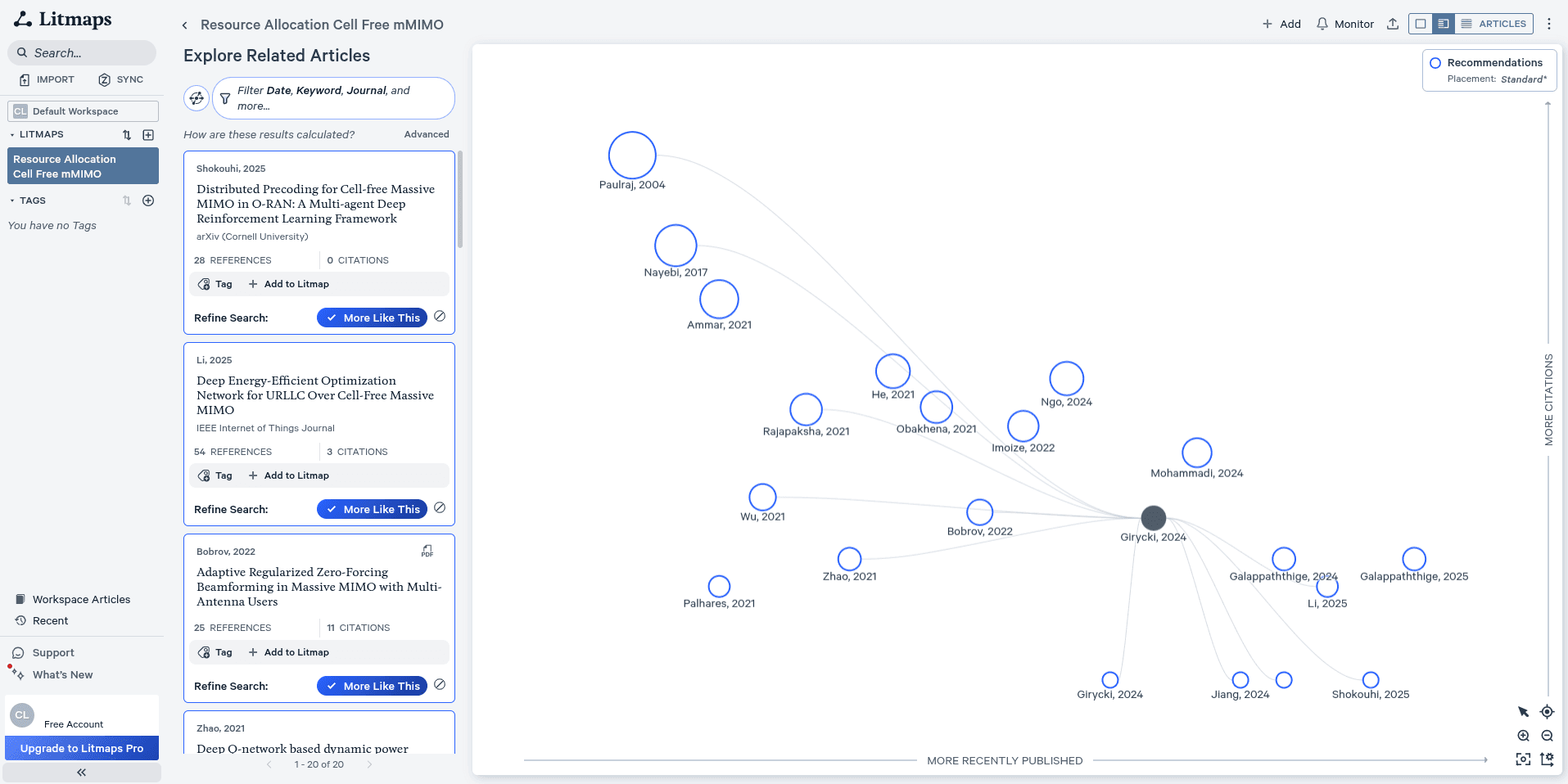
Core Innovation: The timeline-based visualization makes explicit what was previously implicit: the historical development of research fronts. This temporal dimension is crucial for understanding why certain approaches dominate and where genuine novelty might emerge.
Strategic Applications in 2026:
Grant Proposal Justification: Visually demonstrate that your proposed research addresses a genuine gap in an evolving research trajectory.
Historical Analysis of Concepts: Track how specific terms or methodologies have changed in usage and prominence over decades.
Predictive Trend Analysis: Identify emerging clusters of recent papers that may indicate shifting paradigms or new research fronts.
Critical Implementation Insight: Litmaps' "Seed Map" feature is most powerful when used iteratively. Create an initial map from a seminal paper, identify key papers from different time periods in the resulting visualization, then generate new maps from those papers to build a multi-perspective understanding of the field's evolution.
The Gap-Finding Paradox: While Litmaps excels at showing connections, its most valuable scholarly use might be identifying meaningful disconnections—areas where few papers connect clusters, representing potential opportunities for interdisciplinary synthesis or novel approaches.
6. Connected Papers: Visual Intelligence for Literature Discovery
Connected Papers represents a distinct evolution in scholarly discovery—one that prioritizes conceptual relationships over exhaustive search results. Rather than returning long lists of papers, it helps researchers see how ideas connect, evolve, and cluster across the literature.
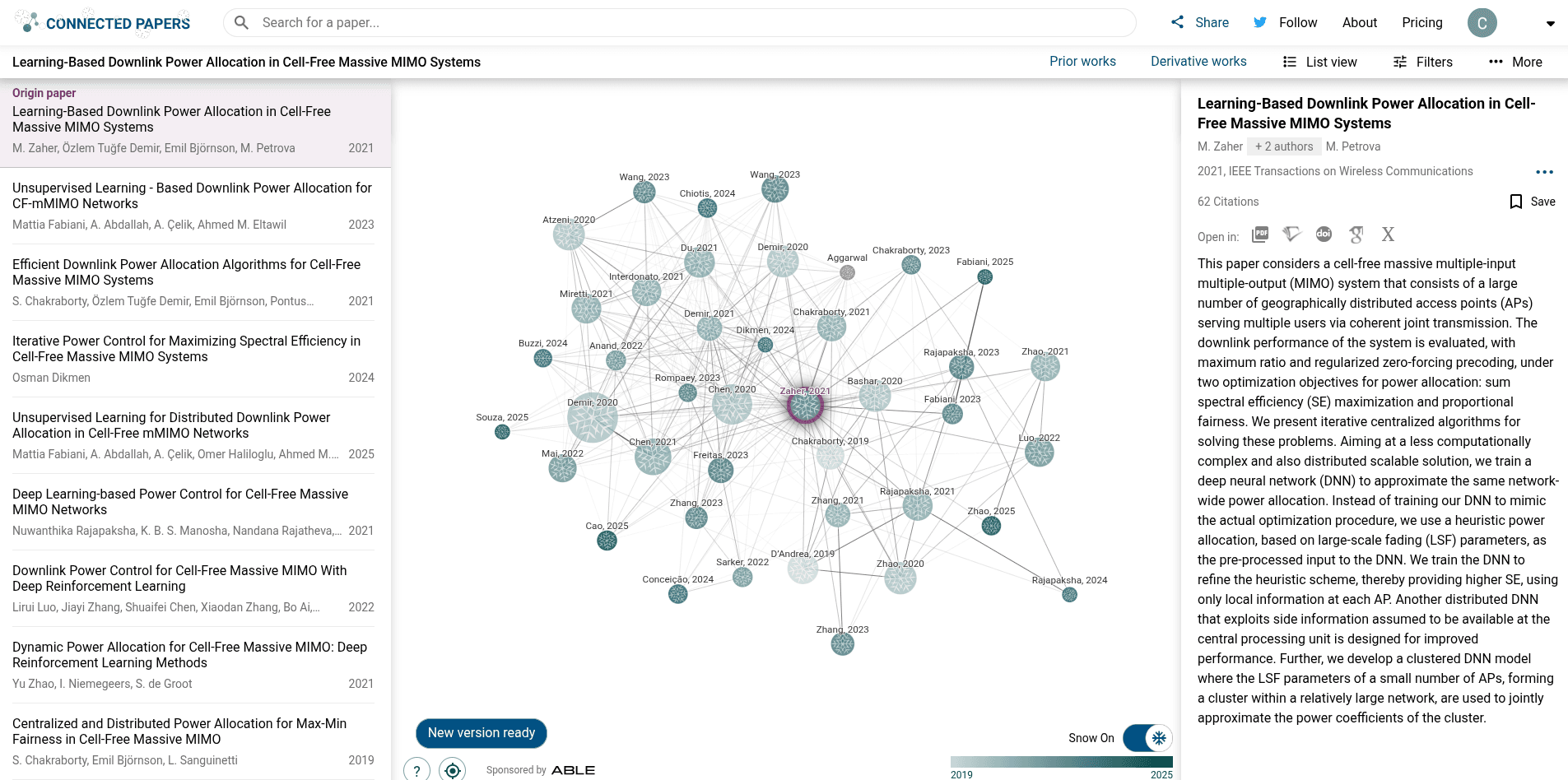
Core Innovation: Connected Papers is built around a similarity graph powered by co-citation and bibliographic coupling. Instead of relying on keywords or metadata alone, it analyzes how papers are cited together to infer conceptual proximity. The result is an interactive visual map that reveals the intellectual structure surrounding a seed paper, highlighting influential prior work and emerging follow-on studies.
Strategic Applications in 2026:
Rapid Field Orientation: For researchers entering a new topic, Connected Papers provides immediate situational awareness. A single seed paper can reveal foundational works, methodological cousins, and parallel research threads—dramatically reducing the time needed to “understand the landscape.”
Idea Lineage and Research Line Tracking: Connected Papers excels at showing how ideas propagate. Its “Prior Works” and “Derivative Works” separation makes it easier to trace theoretical origins, methodological evolution, and the direction in which a field is moving.
Gap and Novelty Identification: By visualizing dense clusters and sparse regions, researchers can intuitively spot overexplored areas and underdeveloped niches. This makes Connected Papers particularly valuable during proposal writing, early-stage literature reviews, and research ideation.
Cross-Disciplinary Discovery: Because similarity is inferred from citation behavior rather than explicit keywords, Connected Papers often surfaces relevant papers from adjacent disciplines that traditional searches miss—useful for interdisciplinary and applied research.
Critical Implementation Insight: Connected Papers is most powerful when used after an initial anchor paper has been identified. It is not a replacement for systematic database searches; instead, it functions as an exploratory and sense-making layer. Researchers who iteratively regenerate graphs from different seed papers gain a multidimensional view of the field rather than a single, potentially biased perspective.
The Coverage and Methodological Consideration: Connected Papers relies on existing citation networks, which means very recent papers, preprints, or niche venues with sparse citation data may be underrepresented. The tool prioritizes relevance over completeness, making it unsuitable as the sole source for systematic reviews. Sophisticated workflows use Connected Papers alongside comprehensive databases—such as Semantic Scholar or OpenAlex—to ensure both conceptual depth and bibliographic coverage.
Validation & Augmentation Infrastructure
These tools operate on the scholarly infrastructure itself, adding layers of critical analysis to traditional publication and citation systems.
7. Semantic Scholar: The AI-Augmented Scholarly Database
Developed by the Allen Institute for AI, Semantic Scholar represents the maturation of academic search into an intelligent, multi-modal interface with the literature.
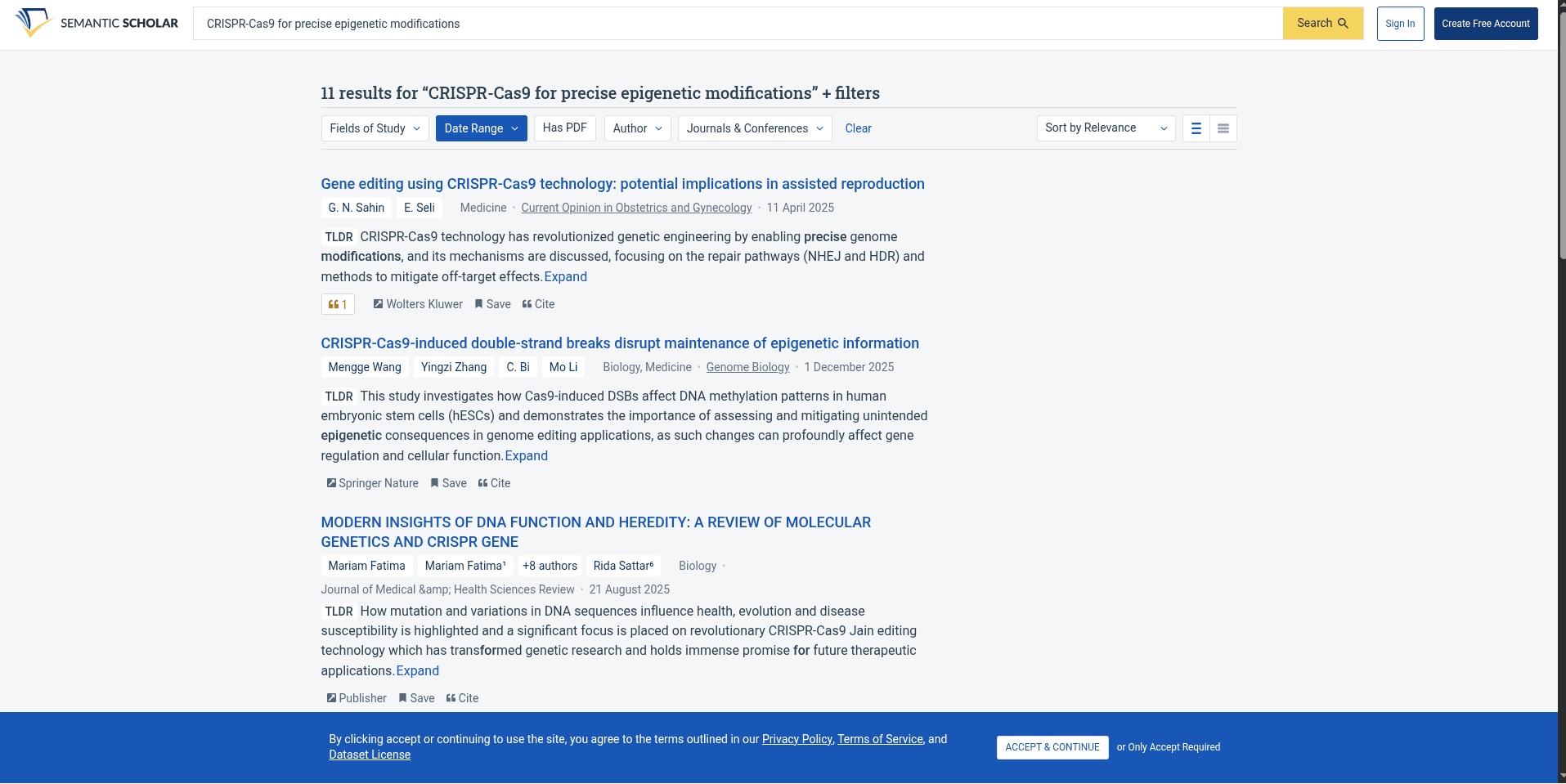
Core Innovation: Unlike tools that operate on top of existing databases, Semantic Scholar has AI integrated throughout its architecture, from semantic search algorithms that understand meaning beyond keywords to the Semantic Reader that transforms passive PDF consumption into interactive analysis.
Strategic Applications in 2026:
Methodology-Focused Discovery: The ability to filter searches by specific study designs (RCT, meta-analysis, case study) makes it invaluable for evidence-based fields.
Rapid Scholarly Triage: The TL;DR summaries and highlighted key claims enable researchers to assess a paper's relevance in minutes rather than hours.
Citation Context Analysis: Seeing exactly how your paper (or a competitor's) has been cited provides crucial insight into your work's reception and impact.
Critical Implementation Insight: Semantic Scholar's "Research Feeds" feature, when properly configured, creates a personalized, continuously updating literature surveillance system. Unlike generic alerts, these feeds learn from your interaction patterns to refine recommendations over time.
The Database Coverage Consideration: While Semantic Scholar's database is massive (200+ million papers), it doesn't include everything. Specialized repositories, certain non-English publications, and some disciplinary archives may be underrepresented. The sophisticated researcher uses Semantic Scholar as a primary search layer but verifies comprehensiveness through disciplinary-specific databases when conducting systematic reviews.
8. OpenAlex: The Open, Transparent Research Knowledge Graph
Developed as the successor to Microsoft Academic Graph, OpenAlex represents a fundamentally different philosophy in scholarly discovery, one built on openness, interoperability, and large-scale metadata intelligence rather than closed, platform-centric search.
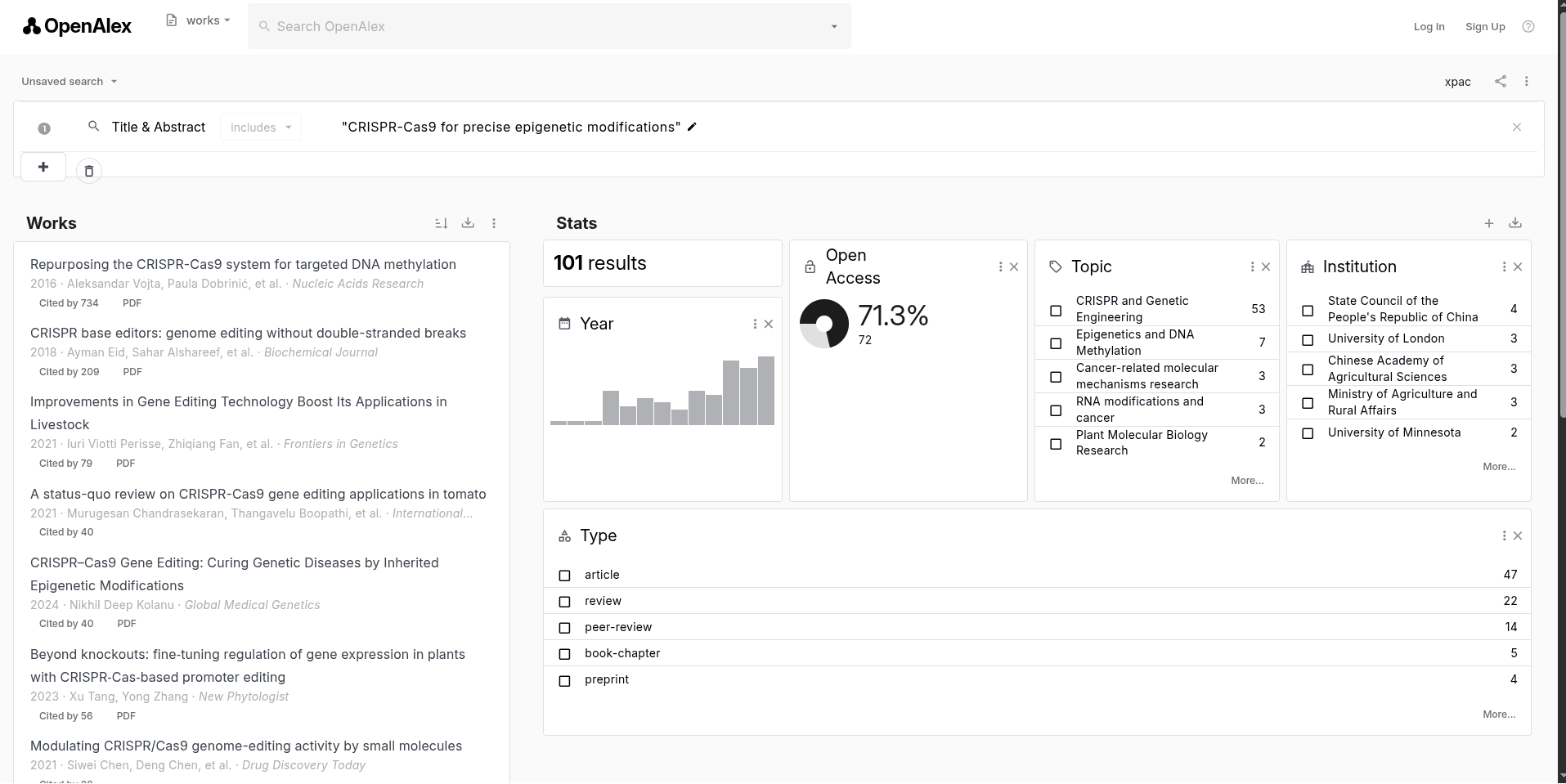
Core Innovation: OpenAlex is not just a search engine; it is a fully open research knowledge graph that maps the global scholarly ecosystem. It structures relationships between works, authors, institutions, venues, concepts, and funders into a machine-readable graph that can be queried, analyzed, and reused without restriction. Instead of prioritizing a polished reading interface, OpenAlex focuses on making high-quality scholarly metadata openly accessible via web search, APIs, and bulk data dumps. Strategic Applications in 2026: Large-Scale Literature Mapping and Trend Analysis: OpenAlex excels at macro-level analysis. Researchers, data scientists, and research offices use it to identify emerging research areas, track topic growth over time, and understand how disciplines intersect. Its concept taxonomy allows users to move seamlessly from broad fields (e.g., Artificial Intelligence) to granular subtopics (e.g., graph neural networks).
Bibliometric and Scientometric Research: With open citation data, authorship networks, and institutional affiliations, OpenAlex has become a backbone for bibliometric studies. It enables analysis of collaboration patterns, citation impact, funding influence, and geographic research distribution—without relying on proprietary datasets like Scopus or Web of Science. Systematic and Scoping Review Infrastructure: While not designed as a reading-first tool, OpenAlex is increasingly used upstream in systematic reviews. Researchers leverage its API to build reproducible search pipelines, export large result sets, deduplicate records, and integrate with tools like R, Python, Rayyan, or custom review workflows. Auditing: OpenAlex’s open citation graph allows transparent verification of citation counts and influence. This is particularly valuable for institutions and independent researchers who want auditability without vendor lock-in or opaque metrics. Critical Implementation Insight: OpenAlex delivers maximum value when treated as infrastructure rather than a standalone interface. Its real power emerges when combined with downstream tools—reference managers, AI summarizers, visualization platforms, or custom dashboards. Teams that invest time in learning its API or using community-built clients gain capabilities far beyond traditional search engines. The Coverage and Usability Consideration: OpenAlex’s coverage is broad and rapidly expanding, but metadata quality can vary across disciplines and regions. Some records may lack abstracts, full-text links, or consistent author disambiguation. Unlike Semantic Scholar’s highly polished AI-driven reading experience, OpenAlex prioritizes openness over refinement. The sophisticated researcher often pairs OpenAlex for discovery, mapping, and completeness checks, then relies on tools like Semantic Scholar, publisher platforms, or domain-specific databases for deep reading and interpretation.In practice, OpenAlex functions as the open backbone of modern scholarly intelligence, powering analyses, workflows, and AI research tools rather than replacing them.